Showing posts with label United States. Show all posts

Sunday, April 9, 2017

Five Things that Really Stood Out After I Returned Home


I started participating in the BloggingAbroad.org Re-Entry Blog Challenge a couple of weeks ago.  It's purpose is two-fold: 1) to provide insights for people who are wondering what it's like to return home after having spent time abroad, and 2) to provide a space for those who have been abroad to process their experience returning home.  You can read my first post here.  This iteration of the challenge is about five things that really stood out after I returned home.  The things I outline below are the first ones I either wrote in my journal or remember talking about with others.

1. Being able to understand (virtually) everything people around me were saying.
While many people in my village in South Africa spoke English, it was common that people would use their home language when having casual conversation or participating in a meeting.  With my limited ability to speak isiZulu, I found myself often giving up trying to translate what felt like rapid isiZulu.  The conversation would fade into other ambient sounds.

When I returned to the US, I had a layover in Chicago where I spent time with a couple of friends.  We went to dinner to grab some Chicago-style, deep dish pizza, which I had been craving for a long time.  While were at dinner, I couldn't help by notice my attention straying from our table to the tables around us.  I also noticed I was having a hard time focusing on any one particular table.  This is when I donned on me that I could understand everything that was being said around me!  For the first time in over two years, I could understand everything because everyone was speaking English.  And instead of tuning out the conversations, I found that I wanted to tune in.  I'm not one for eavesdropping, but now I wanted to listen in simply because of the novelty that I could.

This renewed sense of understanding was fun and exciting at first, but then the overwhelm creeped in because being able to understand everything meant I could understand everything.  I was bombarded.  I felt my energy being scattered trying to keep up with all of the conversations.  Over time, thankfully, I have learned to focus my attention again and now have control of when I tune in, tune out, and choose when I engage.  I feel like one of the X-men learning how to control her/his superpower.

Xavier Teaching Erik (Magneto) to Control His Superpower

2. Idioms are confusing.
Idiom. noun. a group of words established by usage as having a meaning not deducible from those of the individual words (e.g., rain cats and dogs, see the light). (Google search).

I admit I used idioms while I was in South Africa; especially when I first arrived.  However, as time progressed, I used them less and less because it took more time explaining what they meant instead of using language that was more direct and literal.

Why would the cat be there in the first place?

The first time I experienced hearing an idiom in the US was in Chicago during the layover.  My friend picked me up from the airport and we got into a conversation about writing, and he told me a story about a time his mom "tore apart" a story he had written.  When he said this, my mind immediately starting picturing his mom literally tearing apart his story; little bits of paper flying everywhere.  It took me a minute to realize I had this image, so I replayed what he said again in my mind and it was then I recognized that he meant his mom edited his story and, by the combination of the words he used, probably meant there were a lot of edits.  I laughed; mostly at myself for the misunderstanding and a little because it made me wonder if this was what South Africans had experienced when I used idioms.

3. Signage.
Signs were (and are) everywhere in the US.  I mentioned bombardment above about being able to hear English everywhere.  Signs meant I could see English everywhere.  This was a whole other level of stimulation.  I remember walking through the airports in Chicago and Cleveland staring at various signs trying to figure out where to go and not quite understanding because some of the signs either felt like they were competing against each other or I was supposed to infer a larger meaning (e.g. a sign pointing down and left meant I was supposed to go down a flight of stairs to the left of the sign - go figure!)

Hmmm... What is one to do?

When I thought signs at the airport were challenging enough, I was met with street signs.  Stop, go, one-way, yield, street names, temporary parking only, and on and on.  There were street signs in South Africa, but not nearly as many, and, besides, most of the time I was a passenger riding in a khumbi (i.e. taxi) so I didn't pay much attention.  Thankfully, the worst that resulted from reading/interpreting all of these signs was a parking ticket.  I got one for parking on the side of the street during the time it was designated for street cleaning.  And here I thought I was lucky to get such a good spot!

4. Options.
I had heard from many Returned Peace Corps Volunteers that the number of options at the grocery store could be overwhelming.  Knowing this and experiencing it proved to be very different things.  My first time experiencing it was at the grocery store was with my mom and sister.  We were at the deli counter.  I was excited to pick out meats and cheeses I hadn't had since I left.  After a couple of minutes of staring at the case, I turned back to my mom and sister who were standing next to the cart and asked if one of them could help me.  I told them I wanted turkey and cheddar, but I couldn't choose which one.  There were too many choices: smoked turkey, mesquite smoked turkey, honey turkey, peppered turkey, and that didn't get into the different brands, and that was just the turkey!  While was standing at the case, my eyes kept darting from one to the next and it was making me feel anxious.  The rest of the time in the grocery store continued in the same vein - me telling them what I wanted to eat and one of them picking out what they thought was best.

Barry Schwartz has a book about the overwhelm felt by having too many options called The Paradox of Choice.  You can also watch his Ted Talk to get a sense of his argument:


5. Pace of life, conversation, thinking.
Re-introducing myself to the pace of life in the US wasn't a new phenomenon having experienced it once before after coming back from a study abroad in Ecuador.  (Oh, how I missed siestas when I came back!)  I guess the hard part this time was my attempt at trying to hold onto the pace of South African life.  Asking people, "Unjani?" (How are you?) and meaning it.  The answer to this question varied depending where I was along Michelle's and my road trip from the South to the Midwest to the Pacific Northwest, which in turn denoted the amount of time someone was willing to give us.  Even moreso was the pace of the conversation - faster, slower, somewhere in the middle.  I had to tune my ears differently depending on a person's pace of speech.  I often found myself at least a couple of seconds behind on jokes and it was worse for sarcasm (another form of using words beyond a literal meaning; see above for idioms).

Even harder still was the pace at which people seemed to be thinking.  I guess these could have been instances of me comparing my inside to other people's outsides, but I felt like I was thinking more slowly!  I felt like all of what my brain had coming in was making it harder to produce a response that matched the quickness of others.  This feeling happened in waves.  The first wave was during our road trip, adjusting to the varied conversations and interactions with family and friends.  The second occurred when I arrived in Seattle, getting settled into our new home and meeting new people.  The third wave, and perhaps the hardest one, was at work.  Conversations seemed to happen so fast, with topics passing in what felt like the blink of an eye.  Moments to make decisions came quickly and I struggled under the pressure of deciding and trying to doing so while feeling informed.  I'm still feeling this effect, but it's getting easier.  I'm also getting better at asking for time to think.

Missing My Hammock Back in Manguzi

This post is part of BloggingAbroad.org's Re-Entry Blog Challenge.

Sunday, March 19, 2017

Three Things I Made Sure I Did When I Arrived Home

It's been about six months since Michelle and I arrived home after serving in the Peace Corps in South Africa. Being aware of reverse culture shock and the U-W curve and having even helped students work through the transition of returning home after having studied abroad, I still find I am subject to the difficulties of the transition: the high's and low's, feelings of happiness, excitement, sadness and loss, and wondering about how I currently live aligns (or doesn't) with my values. This post is the beginning of an(other) attempt at trying to process through these thoughts and feelings. It's inspired by the After Abroad Blog Challenge. You could follow the link at the bottom of this post to read more about it.

This post's challenge: What are the first things you made sure to do when you arrived home?


Hugged My Family.
I am incredibly grateful that I got to see my parents while I was abroad.  They came to visit for a couple of weeks during my second year there.  Despite having just seen them, though, I still missed them greatly.  I missed my siblings immensely too, and I didn't see them the entire time I was gone.  We have always been a close family, so it was hard to be separated by so many miles.  I'm also grateful for the technology that allowed us to stay connected, but there's nothing like being in the presence of the people who are closest to your heart.

The Fam at Lake Erie

Phoned My South African Family
Before leaving South Africa, I participated in the incoming Education group's training by facilitating a few sessions.  This meant I left my village a couple of weeks prior to actually leaving the country, so there was a delay in the telling my South African family (host family and teachers) I was back in the US.  They were aware of my plans; however, it still felt a little strange to say my goodbyes and still remain in the country a little longer.  When I got back to the US, I didn't have access to a cell phone for a few days, which meant I couldn't contact my South African family right away.  When I did get a phone, though, the first thing I did with it was to contact them to let them know I was okay.  They were relieved to hear I was safe and expressed how they already missed me.  I had already missed them too.

The Host Family

Laughed with Friends.
As part of our homecoming, Michelle and I planned another epic road trip like the one we had done before leaving for the Peace Corps; except this time, we were going to drive it in reverse from Texas and Louisiana, up to Ohio, and across to Washington.  Along the way, we made plans to stop and see our friends.  It felt so, so great to see them.  It was also kind of funny in that in the two years in between visits it donned on us that anything could have happened because in the same amount of time we might have gone without seeing each other due to the fact that we're all spread throughout the country.  But then reality sunk in and that there were changes: some of us had been abroad, some of us had children, some of us changed jobs, and all of us experienced life changes.  It was wonderful reconnecting with our friends and reminding ourselves that love extends beyond family.

Old Friends

New Friends

*This post is part of BloggingAbroad.org's Re-Entry Blog Challenge.

Saturday, October 8, 2016

It's Weird to Be Back...

Joe and I officially became Returned Peace Corps Volunteers (RPCVs) on August 24, 2016...
Our "official" COS (close of service) photo...
...and our super-fun Peace Corps family photos.

~~~~~~~~~~~~~~~~~~~~~~~~
We left South Africa and embarked on a beautiful, tearful, magical three week road trip where we were blessed to visit our phenomenally supportive, loving (and patient) family and friends.

We were reminded of all of the "life" we have missed by being far away: little children who are now giants compared to their former selves, babies that never existed before we left, the absence of loved ones who have passed on, the day-to-day living of lives.

It also took me nearly two weeks to fully grasp that, despite it feeling like an awesome vacation, I was not going to be returning to my village, my learners, my host family, my coworkers, or any aspect of the life I left behind in South Africa.

Thus, I ended the road trip feeling very disoriented and lost. My head was spinning with all that was missed, and all that I lived that my family had missed, and all that I would never live again.

~~~~~~~~~~~~~~~~~~~~~~~~
And finally, we arrived in Seattle. I had lunch with old friends. I visited my old colleagues and picked up right where we left off. It felt like, aside from some new faces and a GIANT new building, the two year gap never happened.

At first that felt beautiful, and then it felt...weird

It was weird to have it feel weird... so I wanted to understand why. And this is what I have come up with so far...

I do not know how I have changed, yet. These two years have been so important and meaningful to me that to even the mildest unacknowledgment (making that a word...) of it feels like a dishonor to all that was lived and all that was shared (between us and our host community), discovered, and sacrificed (by ourselves and our supporters) to make it happen. I haven't taken the time or the space to reflect on all of this and make a new meaning of the world around me, yet. Until then, I feel this weird disconnect between my soul and my body. I don't know the new "me" that I am, and that is terrifying.

So, I feel scattered and unconfident and speak rambling gibberish as my frantic brain works overtime to build connections and pathways around new paradigms and ways of being.

I am working to reflect in stages through my own guiding prompts. And there is one thing that I know after my first journaling session...
i am held.
My first reflection product.
I am held by a community who loves me and will churn out housing options, job postings, and messages of hope when I am feeling down. I am held by the higher powers of the universe (god, goddess, ancestors, whatever label one might use). I am held by my partner who is there for me, ride or die. I am held.
~~~~~~~~~~~~~~~~~~~~~~~~
Thank you for holding me.

Sunday, May 8, 2016

A Mother's Reflection on Visiting her Peace Corps Volunteer

HAPPY MOTHER'S DAY 2016!

A month ago, M's parents came to visit us in South Africa and we would like to honour PCV moms on this Mother's Day by sharing about the trip, in my mom's own words... Q & A style.
My parents and I in Simon's Town. Joe was teasing us for being matchy-matchy.

What is the most cherished moment from your time in South Africa?

My most cherished part of the trip were my interactions with South Africans. It started with learning Cape Town history by Sean at Verona Lodge, interacting with Yasmina at the Cape Malay cooking class hosted in her own home and learning Bo Kaap history.
Mom learning how to make roti, a type of flatbread that is popular in many Indian and Malay dishes
Michelle learning to make roti.
Joe and Daddy learning to make samosa (or samoosas).
Then came Mama Mbatha [NB: J&M's host mom during training]. I adore this woman. She loves Joe and Michelle with her whole heart. She took what life dealt her with smile. Our discussion about rondevels, ancestors and talking to ancestors over tea keeps playing in my mind. Playing cards with the boys in both families [J&M's current host family and Mama's family] is a big highlight. Their current host family, especially their host brother and gogo [grandmother], were open and we found info on some of the modern Zulu culture.

Playing cards with our host brothers
J & M's Host Family
The school visits were such eye openers. These kids work hard. They have so much dedication in their hearts to your library, to their traditions and dances, and to the importance of education. These interactions made the trip.
Momma reading to learners at recess
Some of my Library Student Assistants
I also really enjoyed the Catholic church that we attended. The songs were so beautiful. Such harmony. We were not on vacation, but rather a cultural journey.
The Catholic Church
But the most cherished moment has to be the time with Mama. We were there for about 24 hrs but she was so open to us and to see the relationship she had with Joe and Michelle, the love and returned love and respect. It was obvious to us that they have made a difference in SA!!
Momma and Mama

What surprised you while you were here?

Two things surprised me.

1. The crime/ warnings of crime and the barbed wire on everything. The people are such polite and friendly people- Why do they accept crime being so prevalent?

2. The "markets" visits. People, including gogos, basically selling everything on the sidewalks or men saying "I will watch your car" to earn a living. Also their creativity with beading, weaving, metal working, tin can art and wood art.

What was the hardest moment when you were here? (Besides saying goodbye...)

The hardest moment was wanting to do more and not be able to do it at that time. I wanted to buy a lot and 200 blocks to start up Mama Maseko's crèche or bring the FEMA trailers there so the schools will have fewer kids per class. We wished to help these schools in some way, like in their libraries. For some reason I thought the books would magically unpack themselves. They are still going through the slow process of unpacking, labelling, and shelving the donated books.
Daddy telling stories to Joe's Grade 6 learners
Momma and Daddy with my Grade 7 learners
Mama Maseko teaching Grade R

What is one thing that you want Americans to know about South Africa?

Americans should know that South Africa is a beautiful and friendly country. Their style of singing  sets your blood wanting to dance within. The country is so green, even though the soil is sandy and it is during a drought. But this greenness doesn't mean the people have water. Mostly I want them to know that the people in South Africa are friendly and resilient. Their struggles with apartheid have given them voice and strength. Despite poverty and unemployment, they are trying to make a living (as evident in their beading and art from even tin cans).
Beautiful South Africa: Cape Town, Western Cape
Beautiful South Africa: Port Shepstone, KwaZulu Natal
Beautiful South Africa: Howick, KwaZulu Natal

Thursday, September 10, 2015

Boxed Lunches and Racism

There is a grade 7 learner at my school, let’s call him “M.N.”, who always comes to the library to eat lunch with me and a group of his friends. I first mentioned him in this post from March 2015. He watches a lot of US movies, particularly racing movies, and is known among my friends for his insightful and often strange questions that he poses to me while we eat. Some of my favourites have included:
  • How many times has someone tried to use reverse psychology on you? Does Joe use it?
  • If someone tried to steal your ride, what would you do for revenge?
  • What is one problem that you grew up with that you will die with?
  • How many times have you been doing a front-flip or a back-flip or a side-flip and fallen on your face?

As you can see, the topics can vary greatly and almost anything is fair game. So, I wasn’t surprised when M.N. started our lunchtime conversation with, “I want to ask you a question, but I don’t think you will like it…”

Me: Well, ask me and we will see.

M.N.: Why is it that white people do not like black people so much?

Me: That sounds like a very important question. Why do you think that white people don’t like black people?

M.N.: Well, it’s just that they kept passing these laws that say that black people must live in one place and white people must live in another. It’s like they don’t want to live near us. So I can only think that they must hate us.

Me: You are right. They passed many laws that said that white people must do these things and black people must do something different, like having different rules, different schools, different jobs, even different drinking fountains. Many white people, especially in historical times, believed many things that were not true about black people.

M.N.: Like what?

Me: Well, for example, they believed the lie that black people are not able to manage jobs that are in businesses or offices. They said that they are only able to do work with their hands. So, they prevented black people from being able to work certain jobs or become the boss in a company.

M.N.: [disbelief] My father worked at the hospital for many years. He also worked in an office at the bank for a long time. He was responsible for budgets with millions of dollars. How can they believe these things?

Me: I am not sure, but I think part of the problem is that they don’t hear these stories like the one of your father. They only hear the things that are not true and they don’t have someone to tell them the truth. We must tell them these stories like your father’s to show them what is true.

M.N.: But, why should I be the one who has to tell the story when you are the one who knows them and can tell it to them.

Me: [thinking both, “I’m totally getting schooled by a 7th grader” and “my kids are brilliant!”] You are right, M.N. I can do that.

… and so I kept my promise. 


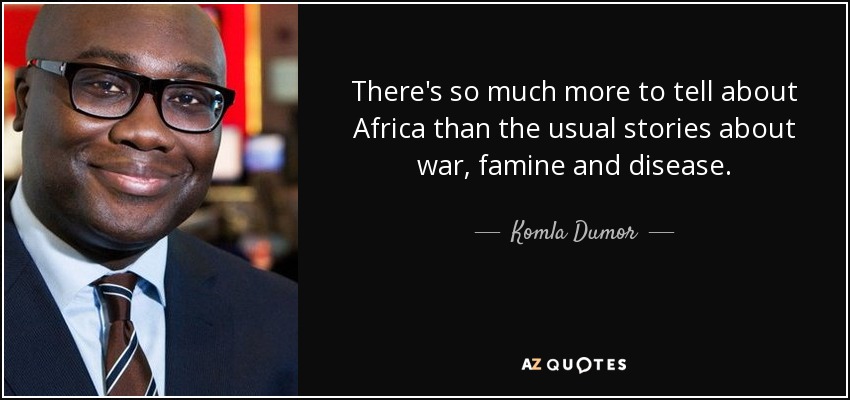
Source: http://www.azquotes.com/picture-quotes/quote-there-s-so-much-more-to-tell-about-africa-than-the-usual-stories-about-war-famine-and-komla-dumor-67-26-66.jpg

Sunday, August 30, 2015

Nicole & Eddie Visit the HK’s!

“Learn from yesterday, live for today, look for tomorrow, rest this afternoon.”
~ Charlie Brown (written on the menu board at Buccaneers Backpackers in Cintsa, Eastern Cape) 
Our rendition of an "awkward family photo." How did we do?!
Michelle and I were blessed to have Nicole and Eddie Minkoff visit us during the July break from school.  While we were together, we were able to go on a road trip along the Wild Coast.  What a beautiful place!  There was a lot to see and do; especially since we enjoy the outdoors.  And the best part – we got to enjoy it with two of our best friends from back home.

Learn from Yesterday: Addo Elephant Park
African elephants at Addo Elephant Park
We definitely found a strong connection to “yesterday” at Addo Elephant Park. Our guide taught us much about the history and significance of the many animals native to South Africa. We learned why humans are unable to domesticate zebras, the differences between African elephants and Asian elephants, and the complicated history between these beautiful creatures and humans. We learned that all of the reserves and parks refuse to release their population counts for black rhinos because they do not want to attract the attention of poachers. We learned that if you are worried about meeting a lion, hang out with a zebra—they can spot a lion at a great distance. We learned that anything, truly anything, could be disguised as a warthog (and vice versa).
“Look at that elephant… Never mind, it’s a warthog.” 
“Was that an eland or a hartebeest?” “Neither, just a warthog.” 
“Is that a lion?!” “Nope. Warthog.”
Warthog: The chameleon of mammals...
Most importantly, we learned about the interconnected history between South African tribes and the wildlife. You can imagine what this land would be like if the animals hadn’t been rounded up behind fences (or, in many cases, such as the lions in Cape Town, killed off by settlers). You gain a sense of reverence for who/what this territory truly belongs to.
Zebra at Addo Elephant Park

Live for Today: Cave Hunting & Cliff Diving
Our first full rest day was in Coffee Bay. We took advantage of this beautiful locale by taking a day hike to find some locally renowned coastal caves. The owner at the backpackers that gave us instructions said the hike should take about 45 minutes, will “follow the beach”, and would pass a deep lake/inlet along the way.  
Our trusty guide dog
The first 10 minutes of the hike followed the beachfront. This is where we met our trusty guide…dog.  At first, we thought the dog was just following us because it wanted food.  But the farther we walked, the more we realised the dog knew where he was going.  The dog stayed with us through the village, wading across the inlet, around the rocks, up a second hill, through some guy’s yard, down a sketchy goat path, through a coastal tunnel and to the hidden cave! At each turn, the dog was there waiting for us as if to say, “Come on guys – this way!”
Posing for a photo between the caves
 On the journey back, Michelle and I decided to linger a little longer at this deep inlet lake. We had been told that there were some awesome cliff diving spots along the edge. The diving spot was a bit like the three bears—there was a baby step (about 1 metres/3.3 feet), a medium step (about 3 metres/9.8 feet), and a giant step (about 6 metres/19.7 feet). Joe had bravely tested the depth from the baby and medium steps, when a group of small children happened upon the swimming spot. One fearless child, who looked to be about 8 years old, climbed straight up to the top and dove right off. We couldn’t believe his tenacity.  Seeing that he was unharmed, our confidence grew.  Michelle followed suit and went to the highest step.  With the help of a countdown from the kids, she leapt into the air holding her nose.  Using the kids and their countdown, I went next.  It felt like I was falling for an eternity, but just as quickly as I left the step I came splashing down into the water.  It was exhilarating!
Joe's leap
Michelle's leap

Rest this Afternoon: Change of Plans at Hole in the Wall
Sounds easy enough...
We planned a seemingly reasonable 13 km hike from Coffee Bay to Lubanzi Beach. We embarked on the journey bright-eyed and bushy-tailed and were not disappointed. The view was breathtaking! The rough fishing trails meandered up and down the green hills along the gorgeous coastline….and up…and down…and up…and through a village…and down. Perhaps we should have learned from our cave hunting experience that any guidebook that says “…and then just follow the coast” is lying to you.
Stunning view from the fisherman's trail
En route to Hole in the Wall
After about 5 hours on trail, we arrived at the famous Hole in the Wall; a natural phenomenon caused by water erosion over time. We started out on our final leg of the hike and realised that we may have bit off more than we could chew. Michelle’s new boots weren’t cooperating…and who could leave this gorgeous view…
Nature is cool!
After re-grouping, we decided to forgo the extension of our trek, rent a room at the local backpackers, and splurge for milkshakes and dinner. The rest was welcomed and we felt properly spoiled.

Note: In our decision to rest, we had to cancel our reservation at the Mbolompo Xhosa Homestay near Lubanzi Beach. This was a true disappointment and we are sorry that we did not get to meet the lovely host family. If you find yourself in the area, consider staying with a local family and breaking bread together.
The view looking over the town of Hole in the Wall
Look for Tomorrow: Thekwini (Durban) and Beyond…
Our last stop was Thekwini (the isiZulu name for Durban). It was our first chance to show old friends around some of the places we have come to love in South Africa. We took Nicole and Eddie to our favourite restaurants, felt like old pros navigating the complicated city taxi system, and enjoyed a lovely walk along the oceanfront. We reflected on the many highlights of our journey together. We have travelled with Nicole many times before, but this was our first time to embark with Eddie as a part of the crew. We are so very glad that he did.  It was such a joy to get to know him better and an honour to witness their joy and love for each other.
Awwwww! Aren't they so adorable?!
There’s nothing like being able to pick up again with old friends and, moreso, being able to create new memories. We are so grateful that Nicole and Eddie ventured all the way to South Africa to share this with us!


Nicole, Eddie, and Joe in Durban

Saturday, July 18, 2015

Michelle's 1-Year Reflection: A Father's Advice

"Over time the novelty of the experience wears off and one day becomes just like the last, new news becomes less apparent as life finds its routine. 
I hope it doesn't happen too fast, and that each day you find something of a surprise.  Resist the mundane and find magic in each moment."
- David Harper, my daddy, August 7, 2014

The Harper clan in front of the Berlin Wall, 1990
A Little Nostalgic Context
If anyone could offer advice on how to adapt to life (as an adult) in a new country, it would be my mom and dad. We spent a lot of our life moving from culture to culture and place to place. In each place, they made an effort to learn the history and culture. My mom took German lessons from a neighbour friend and kept in touch with them for years. My dad is the perpetual explorer, seeking new information and history at each stop. Add a little revelry and that's a perfect snapshot of their life together. 

As their child, I learned how to take advantage of cultural exchanges in our community. I went to an all-German-zero-English kindergarten. My brother took French immersion classes. We would visit our neighbour's farm in England and "help" them with their lambs (I say "help" because it was more "watch" or "get in the way" than helping). 

I also remember going on infinite car trips, because they taught us (and I still believe this is true) that you cannot know a country until you SEE the country, explore its history, and meet its people. By 5 years old, I was an old pro at car games: license plates, the alphabet game, and "cows" (a game I'm pretty sure my parents made up when we were too far off the grid to see any signs, cars, or people. The goal is literally to count the cows that you see before anyone else does... riveting, I know, but we were seriously competitive).

I say ALL of this to say: when my parents give me advice for moving to a new place, I take it to heart.

"One day,  the novelty of the experience wears off... and life finds its routine."
I am blessed that my "routine" includes spending time with these ladies.
When we first arrived in country, our senses were overwhelmed with all of the new sites and sounds (which is totally justified because South Africa is a truly beautiful country). My thoughts were preoccupied with how to improve my bucket bathing techniques, the proper way to greet a person, and reading between the cultural lines to interpret what was happening but not being said.
At first, it was intoxicating. Then, exhausting. Now... well, now it feels just "normal."

I didn't really notice this "normalness" until very recently. We have been travelling and preparing for the next cohort of volunteers, so a lot of people have been asking, "What's it like to live in a village?" And I realized that I get a bit surprised by their asking... so my response is something like, "It's great! My school is supportive. My family is awesome. The place is beautiful. We have a dog..." and I quickly run out of things to say. I have to REMIND myself that they really want to hear about "village living" (water and electricity access, transportation, cultural exchange), so I add those in as, somewhat, after thoughts.

In 2011, when people asked us about what it was like to be in Tacoma, I would never have thought to say, "well, we have indoor plumbing, electricity 100% of the time..." I didn't think about it at all because, at that point it was my normal. (I'm laughing at my future self who will move back to the US and will be fully overwhelmed by these things that used to simply be normal, but I digress... ).
These are signs that the novelty of village living has worn off for me. I feel some shame in admitting it,  but, to be honest, I think it is a good thing in many ways.

First, "intoxication" and "exhaustion" are, for me, not adjectives for a sustainable, healthy way of living. Adjusting to village life is an emotional roller coaster. My heart is happy to have found some solid ground.

The second point is still a bit rough around the edges, because I am unpacking it just now... Now that it feels more routine, it also feels more authentic. I used to feel so uncomfortable with aspects of village life/cultural each that I found myself in my head a lot. I would focus on every word coming out of a person's mouth plus the spaces between each word. It took energy. I didn't feel present. It was hard.

This "new normal" is allowing me more space to share my authentic self. I feel connected. I feel relief. In other ways, I want to sit with what else might be lost when I lose this novelty. Wonderment? Have I lost any gratitude? Or awe? These are things I will be more intentional in considering as I am at my site.

So... "the novelty will wear off and you will find routine? " Yup. Truth. Check... 

"I hope each day you find something of a surprise."
Mopane worms, a type of caterpillar, are a common snack in the springtime.
Yes! Also true!
I am always reflecting on the small moments that have made me chuckle and think, "well, this is South Africa." Days when:
  • Your colleagues offer you caterpillar (see photo above), cow intestines, or goat's tongue for lunch. 
  • Your students sing your favourite prayer song BECAUSE they know it is your favourite prayer song. 
  • Your learners do something to touch your heart and amaze you, such as, bringing their own ideas to manage the library, teaching each other the things you have taught them, or strutting in some new-found confidence that they wear like a comfortable, worn-in shoe. 
  • The one million tiny, unexpected,  acts of kindness that warrant a moment for pause and gratitude.
If you blink, you can miss these everyday beauties and small surprises. I want to be more intentional to share these things with those of you at home, because these are the connection points that build the fabric of this experience for me (us).

"Resist the mundane and find magic in each moment."
Joe captured this sunrise on his way to school one morning. Beautiful...
This was my daddy's main charge. This is the piece that I want to carry forward into my second year. 
Resist the mundane. Seek magic.

To me, that means, to pause. Celebrate. Be present. Look around you. Find beauty. Giggle. Ask questions. Go deeper. When I feel like I am in comfortable depths, then I should go deeper again.
All in all, I can say that, even after 29 years of "wisdom" and a full year's Peace Corps experience (dad, get ready to take a screenshot to commemorate the time and date), a father's advice still holds water.
And, just to lay it on thick because I love you and you are so far away...
Dad, you were right.

_____________________________
Tell us what you think:
- How do you find magic in each moment?
- How do you resist the mundane?
- How do you "go deeper" once you have started to feel comfortable?

Sunday, May 10, 2015

Mother’s Day: An International Holiday

Today is Mother’s Day in BOTH the US and South Africa. So, we wanted to take a moment and thank the three moms who have supported us the most in our PC journey!

Debi / Momma (Michelle’s Mom)
Michelle, Momma, and (BONUS!) Maw-maw
Hey Momma,

Happy Mother’s Day from South Africa! :) I remember that on last Mother’s Day someone posted a photo of a PCV that said, “It takes a special kind of mom to raise a Peace Corps Volunteer.” It is so true. I learned about the importance of volunteering and “leaving a place better than you found it” from you. The countless merit badges, summer camps, USO volunteer shifts, and church service activities that we completed together have anchored the value of service to the core of who I am. That sense of service paired with an early love for culture and travel (although this could be more attributed to following dad’s job—you CHOSE daddy, so you get at least partial credit ;)).

I value your support through our service here in South Africa. I know it is scary to see your baby move halfway around the world to a brand new place. You have been very brave and encouraging, even helping me remember how long I have wanted to do this. Thank you and enjoy a Happy Mother’s Day. I hope daddy and Beau (and Anne, from afar) have planned something sweet for you today. xoxo

Love,
Shelly
(aka “Bits”)

Mrs. Michelle / Mom (Joe’s Mom)
Joe and Mom
Dear Mom,

Happy Mother’s Day! While I know you wish I was there to celebrate with you in person, you have been such a great support for me since I’ve been here in South Africa. As I reflect on Mother’s Day and its significance, I am reminded of the values you instilled in me that I strive to exhibit everyday: love, kindness, and openness of the heart and mind… Since arriving in South Africa, I have met so many people here who remind me of you because of their friendliness and willingness to help a complete stranger (me!). It makes me smile when I think of the countless times we were somewhere and you struck up a conversation with the person next to you. The two of you would talk and laughed, leaving me with the impression that you’ve known each other for a long time. I only find out later that you just met that person. It’s a beautiful thing how effortlessly you connect with others. It is these qualities that I strive to embody through my interactions with people here. Thank you for being such a great mom and role model.

Love,
Your son,
-Joey

Mama Mbatha (Our PST Mom)
Nolwandle, Mama, and Bongani
Mama othandekayo,

Siyakuthanda! Siyakukhumbula futhi. Siyabonga ukuthi wasamukela ekhaya lakho. Usiphe ukudla, wasifundisa. Usinike umndeni omusha wasinika nekhaya elisha. Siyabonga kakhulu.

Siyathemba ikuthokozisile iMothers Day yakho,

Nolwandle noBongani


[English Translation:

Dear Mama,

We love you! We miss you, also. We are thankful that you welcomed us in your home. You fed us. You taught us. You gave us our new family. You gave us our new home. We thank you very much.

We trust that you enjoyed/rejoiced in your Mothers Day.

Nolwandle (Michelle; “Mother of the ocean”) and Bongani (Joe; “Giving thanks”)]