Showing posts with label Cape Town. Show all posts

Sunday, May 8, 2016

A Mother's Reflection on Visiting her Peace Corps Volunteer

HAPPY MOTHER'S DAY 2016!

A month ago, M's parents came to visit us in South Africa and we would like to honour PCV moms on this Mother's Day by sharing about the trip, in my mom's own words... Q & A style.
My parents and I in Simon's Town. Joe was teasing us for being matchy-matchy.

What is the most cherished moment from your time in South Africa?

My most cherished part of the trip were my interactions with South Africans. It started with learning Cape Town history by Sean at Verona Lodge, interacting with Yasmina at the Cape Malay cooking class hosted in her own home and learning Bo Kaap history.
Mom learning how to make roti, a type of flatbread that is popular in many Indian and Malay dishes
Michelle learning to make roti.
Joe and Daddy learning to make samosa (or samoosas).
Then came Mama Mbatha [NB: J&M's host mom during training]. I adore this woman. She loves Joe and Michelle with her whole heart. She took what life dealt her with smile. Our discussion about rondevels, ancestors and talking to ancestors over tea keeps playing in my mind. Playing cards with the boys in both families [J&M's current host family and Mama's family] is a big highlight. Their current host family, especially their host brother and gogo [grandmother], were open and we found info on some of the modern Zulu culture.

Playing cards with our host brothers
J & M's Host Family
The school visits were such eye openers. These kids work hard. They have so much dedication in their hearts to your library, to their traditions and dances, and to the importance of education. These interactions made the trip.
Momma reading to learners at recess
Some of my Library Student Assistants
I also really enjoyed the Catholic church that we attended. The songs were so beautiful. Such harmony. We were not on vacation, but rather a cultural journey.
The Catholic Church
But the most cherished moment has to be the time with Mama. We were there for about 24 hrs but she was so open to us and to see the relationship she had with Joe and Michelle, the love and returned love and respect. It was obvious to us that they have made a difference in SA!!
Momma and Mama

What surprised you while you were here?

Two things surprised me.

1. The crime/ warnings of crime and the barbed wire on everything. The people are such polite and friendly people- Why do they accept crime being so prevalent?

2. The "markets" visits. People, including gogos, basically selling everything on the sidewalks or men saying "I will watch your car" to earn a living. Also their creativity with beading, weaving, metal working, tin can art and wood art.

What was the hardest moment when you were here? (Besides saying goodbye...)

The hardest moment was wanting to do more and not be able to do it at that time. I wanted to buy a lot and 200 blocks to start up Mama Maseko's crèche or bring the FEMA trailers there so the schools will have fewer kids per class. We wished to help these schools in some way, like in their libraries. For some reason I thought the books would magically unpack themselves. They are still going through the slow process of unpacking, labelling, and shelving the donated books.
Daddy telling stories to Joe's Grade 6 learners
Momma and Daddy with my Grade 7 learners
Mama Maseko teaching Grade R

What is one thing that you want Americans to know about South Africa?

Americans should know that South Africa is a beautiful and friendly country. Their style of singing  sets your blood wanting to dance within. The country is so green, even though the soil is sandy and it is during a drought. But this greenness doesn't mean the people have water. Mostly I want them to know that the people in South Africa are friendly and resilient. Their struggles with apartheid have given them voice and strength. Despite poverty and unemployment, they are trying to make a living (as evident in their beading and art from even tin cans).
Beautiful South Africa: Cape Town, Western Cape
Beautiful South Africa: Port Shepstone, KwaZulu Natal
Beautiful South Africa: Howick, KwaZulu Natal

Wednesday, May 6, 2015

Cape Town Series: Untold Stories

By far, my favorite Cape Town attractions were the varied and rich museums. Unfortunately, Joe and I were only able to visit three museums: the Iziko Slave Lodge Museum, the District Six Museum, and the Bo-Kaap Museum. I say only because I am discovering that I have an abnormal love for social and cultural exhibits. In preparing this post I finally realized what draws me in to this particular breed of nerd-dom—I seek stories. I am passionate about witnessing the stories of real people behind social movements and historical cliff notes, the ordinary lives that weave together to form extraordinary societies and bring about the very best—or sometimes worst—of our humanity.

These are precisely the kinds of stories we found in the museums of Cape Town.

The Iziko Slave Lodge Museum: Stories of injustice, resistance, and female activists
The Iziko Slave Lodge Museum building once housed 9,000 slaves during the early life in the colony of Cape Town. The slaves were stolen from their homes in East Africa, Mozambique, Madagascar, India, and several countries all throughout Asia—even as far away as Japan. The living conditions were atrocious: there were almost no exterior windows for ventilation or light, the basement would often flood, the rooms were overcrowded, and the central feature was a courtyard where the public floggings would take place. Despite massive renovations and the passage of time, I could still feel the somber weight of death and sorrow held within its walls.

The first floor of the museum is very well curated and includes videos, art displays, a reading of primary texts, photos, diagrams, and stories of life within the slave lodge. There were many displays that I found moving. One that was particularly striking was a backlit column that was etched from floor to ceiling with some of the known names of those who were enslaved. Knowing that each name represented a person with a life, family, talents… and that this column was just a sample of those whose stories have been tragically lost and remain untold.

Human trafficking and slavery still exist in our world. The Slave Lodge is not a relic. It is a reminder that there are untold numbers of "slave lodges" in our world today. Our work is not finished.
On the second floor, they switch gears and the displays have less…focus, shall we say? It included: collections of silver and trinkets from wealthy white cape families, weaponry from tribes and colonists, history of women’s textiles, mail service in port, a display devoted to the music of the struggle for freedom, and three rooms devoted to female freedom fighters. I would like to spend some time with these last two.

In the exhibit titled "Singing Freedom: Music and the struggle against apartheid," it was powerful to see how protesters rose against each blow from the apartheid government with new songs and new resolve. I loved to hear the many different South African languages expressing these words of resistance and power. The display showed how the music evolved over time and ended with a case study, if you will, to ask the reader to reflect on the place of these songs in our current social context and history. This rose many questions within me that I enjoyed tumbling through.
Nobel Square, Cape Town.
Statues honouring Chief Albert Lithuli, Archbishop Desmond Tutu, FW de Klerk, and Nelson Mandela.
The final display was titled “There’s something I must tellyou” and shared, through three different art forms, the stories, lives, and sacrifices of women in the anti-apartheid movement. Often the stories of the freedom fighters are male-centric; we hear about Nelson Mandela, Steve Biko, Oliver Thambo, Chief Lithuli… never Lillian Ngoyi, Helen Johnson, Ellen Khuzwayo (Exhibit A: the statues pictured above!). My eyes diligently read every word and tried to etch every face into my memory. The most powerful element for me was a documentary in which a few of these women shared their stories, lessons, and passions in interviews with their daughters. The passing of this wisdom from one generation of women to the next moved me beyond words. I've embedded just one of the videos for your viewing pleasure. Others are included at the webpage linked to the title of the display (above).


The Bo-Kaap Museum: Stories of community, contribution, and belonging
The Bo-Kaap museum highlights the social, political, and cultural significance of the “Cape Malay” community within Cape Town's history, present, and future. (NOTE: “Cape Malay is the commonly used collective term for Cape citizens who trace their ancestry to Southeast Asia or East Africa. The term does not acknowledge the sheer diversity of the community it represents. The term is also often interchanged with “Cape Muslim” as Islam is a very popular religion within the community.)

Visiting this museum was an intentional choice for us. As I stated in the previous paragraph, much of the social and political history of Cape Town that is told today focuses on the exploits and interaction between white men and black men. There are a few footnotes of other cultures and racial groups, but the story is largely neglected and untold. I wanted to gain even a sliver of knowledge of the gaps in this narrative.

The museum is small, but welcoming. The furniture is warm and the stories are rich. My favorite display was a display of interviews with residents and former residents of the Bo-Kaap, titled “Bo-Kaap in Conversation." Two of the residents were brothers who both went on to become educators and principals. They shared how their upbringing inspired their path and work towards justice within the school system. I loved hearing their stories and seeing their home through their eyes.

My second favourite display was on the wall of an open community space. The wall showed highlights from community mapping activities with the resident. They highlighted the significant meeting spots and cultural centers. It also showed the sheer number and diversity of mosques within the small sector of the city.

We are still largely ignorant (because an exhibit can barely scratch the surface and are no replacement for deep, consistent interaction), but I appreciate the museum for bringing forth voices I had never heard and stories I had never known.

The District Six Museum: The stories of home, expulsion, and renewal
Source: http://farm2.static.flickr.com/1097/5143441094_138aea8302.jpg
In the late decades of the 19th century, District Six was one of the most racially diverse communities in Cape Town. In 1966, under the Group Areas Act of 1950, the district was deemed a white residential area. The government began the forced removal of 60,000 established residents, which continued for nearly two decades. Families were expected to move to crowded townships on the other side of town or other racially segregated sectors of the city. In a neighbourhood where car ownership was a rarity, this meant that many never saw their old friends again, could no longer get to their jobs, and had to close their businesses. Many of the city blocks that were razed by the government are still vacant lots, shadows of the lives that used to thrive in the area.

The museum is largely owned, developed, and curated by former District Six residents. They have contributed their photos, letters, and day-to-day anecdotes of their lives before the forced removal. You can read about the social clubs, the shops and factories, the old hang-outs, even the former street gangs of the neighbourhood. They have captured the lives as they were—and the grief and pain when that life was lost.

The most powerful aspect of the museum is the space it has provided for former residents to mourn, advocate, engage together, and heal. It has started to host varying programs to reconnect residents and capture their stories in powerful ways. Some examples include:
  • Embroidery: During a community meeting, the former residents were asked to share their former address and a few thoughts. These were recorded and embroidered into long sheets that line the side of the lobby.
  • Cooking: Former residents are invited to share their favourite family recipes (and their accompanying stories) as a group cooking class. Each participant’s recipe and story was subsequently stitched into fabric and displayed. You can walk the hallway and witness the diversity of meals and cultures from the community.
  • Poetry Mosaic: Former residents wrote poetry about their journey of displacement and finding home onto ceramic tiles. These tiles were then cemented into the concrete of the new addition of the museum.
  • Youth Programs: The museum hosts programs for youth, particularly exploring the themes of cultural identity, peace and activism through art, and recording oral history.
The museum has also been active in the efforts to provide financial restitution for the families.

Final Reflection
For a few years now I have been toying with the idea of doing an art series combining some form of portraiture with an artistic expression/story-telling of our intersectional identities (examples: a self-portrait collage which highlights my connections to white privilege, gender oppression, and queer identity through pictures and textures; or a similar series where each piece is devoted to one identity; or a written reflection overlaid over a portrait… but I’d need more photoshop skills to pull that off). These exhibits really renewed that passion for a long-term project that would combine art, capturing stories, and social justice. I’ve been googling graduate programs in art therapy, peacebuilding, sociology, and social justice. I would need to be so much more qualified and enhance my technical skills, but… the idea of working in a community art space with structured artistic-reflective-justice-themed activities in an urban (or semi-urban) environment makes my heart and mind race with ideas and hope.

So, just to crowd-source a bit: Leave a comment if you know of a community center or graduate program doing this awesome work! I’d love to check it out!


Sunday, April 19, 2015

Cape Town Series: Male Privilege


Lion's Head to the Right of Table Mountain
There was a full moon while we were in Cape Town, and a friend recommended doing a night hike up Lion’s Head. Lion’s Head is a relatively small mountain adjacent to Table Mountain. The hike up it is pretty cool. The trail is easy to follow most of the way up. (It’s actually big enough for a 4X4 to drive up part of the way. Paragliders have a launch on one side of the mountain.) There’s a fork about three-quarters of the way up the trail, giving hikers the option of continuing along a trail that’s more of the same or climbing up chain ladders to bypass that section. The best part of the hike is the route itself. The trail wraps its way around the mountain, lending a 360-degree view of Cape Town, the Atlantic Ocean, and surrounding area. The experience of hiking by the light of the full moon was really cool (mind you, Michelle and I had headlamps for the darker sections of the trail).
A View of Lion's Head from the Top of Table Mountain (midground, left), with Joe in the Foreground, Cape Town below, and Robben Island in the Background
In addition to the excitement Michelle and I felt while hiking up Lion’s Head, she and I were both scared that something would happen to us. Back in our village, we’ve grown accustomed to being indoors after sunset. This is because Peace Corps asks volunteers to stay in their homes for their safety. (Disclaimer: in all the time we’ve been at our site, nothing bad has happened to us. However, harm has come to other volunteers around the world, including South Africa, during the night.) We developed a plan in case we ran into trouble and we had phone numbers for taxis programmed in our phones. Our fears eased a little as we made our way up the trail because we saw other hikers. (We later learned that full moon hikes are one of the busiest times on the trail.) However, we remained vigilant just in case.
A Panorama of Table Mountain, Chapman's Peak Drive, and the Atlantic Coastline
After hiking for about 30 minutes, we turned a corner and I saw two middle-aged women sitting on a bench. It looked like they had been watching the sunset and were now enjoying some conversation. Seeing these women, I felt immediate relief about Michelle’s and my wellbeing. The thought that went through my mind was, “Well, if there are two middle-aged women still here and it’s getting dark, Michelle and I will be fine.”
Initially, I didn’t think anything more about having that thought. Well, as anyone who has spent time on the trail knows, there’s lots of time to spend in one’s head because there’s isn’t much to do while hiking other than to hike. Letting my mind wonder, I came back to that thought about the women and my own safety. Something wasn’t sitting well with me, and then it donned on me. My perceived safety was based on the assumption about the presence of other people who were more likely to be a greater target of harm. Phrasing it another way… there’s NO WAY any HARM will come to ME because it isn’t likely someone would try messing around with a MAN.
Cape Town Nestled beside Table Mountain
Same View, but after the sunset, and with the City Lights and Full Moon
In my experience working in higher education, and, more specifically, as someone who has been working to improve social equity in society, I have found that the idea of “social justice” is difficult for people to understand and accept. I admit that it has taken me a long time to understand the ill-effects of biased treatment of one individual or group over another based on their gender, skin color, socioeconomic standing, sexual orientation, and other identities, and I’m still learning. Even more, I’m still learning how to break down social inequities and increase opportunities for restoration, growth, healing, and understanding. (This may be heady, but it’s my personal philosophy that what I have just described is a practice that takes people their entire lives “perfecting”.)
A Bench with Table Mountain in the Background
The reason I’m telling the story about the thought I had about my own safety is that I’m still discovering the depths to which my own biases are buried. Since coming to South Africa, I have been challenging gender stereotypes; not only through my words, but also through my actions. For example, the teachers at my school were incredulous when they found out that I liked to bake. They’ve come to like it, though, because they like when I bring cookies to school.
Michelle and Joe Getting in a Photo as the Sun Sets over the Atlantic
I admit that I’m not constantly digging into my subconscious to see what prejudices come out, but what I find is that my biases and prejudices show themselves sometimes when I least expect them. For example, as I was hiking along a trail, thoughts like the one I described above come into my head.

But I don’t think I’m alone in this. Now, there are lots of people who are vocal about social justice and equity and can be seen on the “front lines”, if I may, in advancing causes associated with them. But there are also people who have thoughts like the one I described above but aren’t sure what to do with them. For me, when I have thoughts like that, I’ve made it part of my own self-discovery to find out what doesn’t sit right with me when I do. (Largely, it’s that my desire is to see people treated fairly.) 
Chapman's Peak Drive with Warm Lighting from the Setting Sun
I’m also writing this post because I want to encourage you to do the same. Sit with the thoughts you have, ask yourself, “What is it that seems 
off?”

If you need a little push to get started, think back to a time one of your family members or friends told a story about a time s/he was treated poorly because s/he was a woman, black, brown, gay, poor, or something similar. I guarantee that if you devote even a couple of minutes to thinking about it you’ll begin asking, “Why does stuff like that happen?”, and you may begin seeking an answer.

Friday, April 17, 2015

Cape Town Series: Driving on the Left-Hand Side of the Road


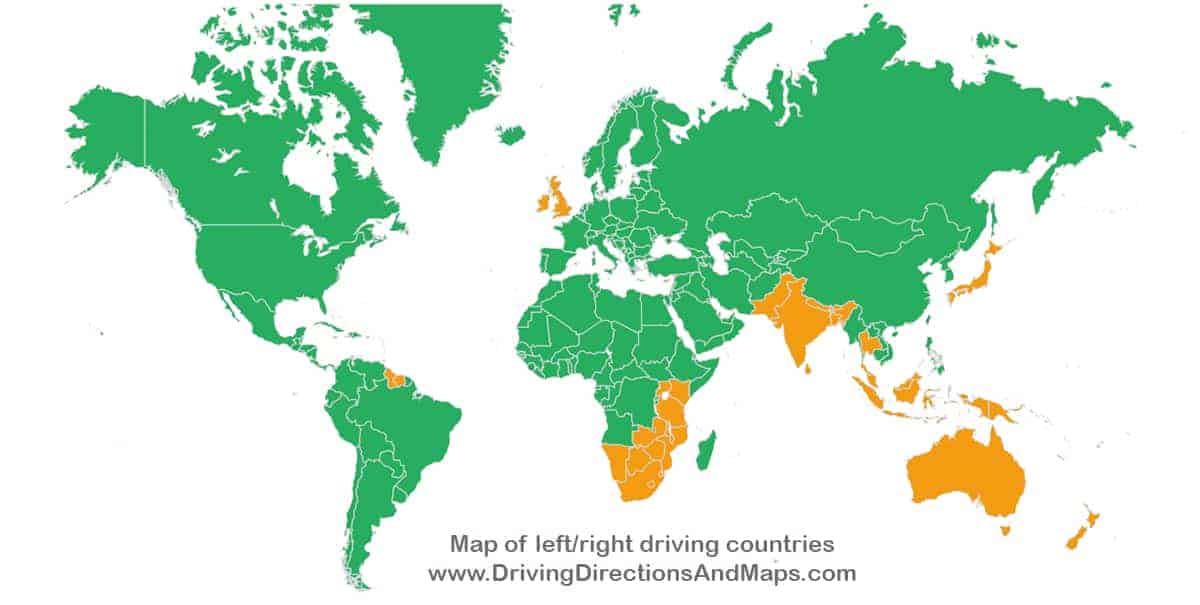
Countries Where People Drive on the Left-Hand Side of the Road (in yellow)
http://www.drivingdirectionsandmaps.com/wp-content/uploads/2015/01/map-of-left-right-driving-countries.jpg
Thirty-five percent of the world drives on the left-hand side of the road, according to National Geographic. South Africa is one of those places.
Michelle and Joe at Cape Point
Michelle and I decided to rent a car for a couple of days while we were in Cape Town so that we could see some of the sites outside the city. Some of the sites included: Kirstenbosch National Botanical Garden, Chapman’s Peak Drive, Cape of Good Hope, and Boulder’s Beach. (I’d recommend going to all of them!)
Kirstenbosch National Botanical Garden
It’s a bird bath – get it?! :P
Between the two of us, we decided I should be the driver and Michelle would handle navigation. Back in the US, Michelle and I learned that we fit best into these roles because driving stresses Michelle and I get distracted when I’m in the passenger seat, which means I don’t do well giving directions.
One of Many Gorgeous Views along Chapman Peak Drive
It had been nine months since I drove a car, which meant I was very excited to get behind the wheel. It reminded me of the time I first got my license. I started with my learner’s permit when I was 15 years old, and I went for my license when I turned 16. I also recalled my parents’ nervousness and trepidation about me getting into an accident. Before leaving the house, my mom would always tell me to be careful; especially when others were in the car because everyone, myself included, were “precious cargo”.
A Bench Overlooking the Beach
In addition to the excitement, I felt nervous. Not only had it been so long since I had driven, but I was in a different country with a different set of laws governing the roads; namely, driving on the left. I was mostly worried about turning into the wrong lane. It was very disorienting making a right turn and going into the opposite lane. Thankfully, I had Michelle with me, so we worked as a team to make sure I didn’t have any mishaps. We actually worked out a system so that she could tell me if I was hugging the left-hand side of the road too closely. (I found that I had a hard time judging the distance on the left-hand side of the car.) Anytime that I got too close, Michelle would say, “lane” and I would move closer to the center line.
Sea Mist Floating onto the Beach
I did have one incident while I was driving. Michelle and I went to pick up a couple of friends, and while I was parking the car I accidentally swiped the side of a planter. The planter, being made of brick, was unscathed, but the car didn’t fair so well. I put a nice set of scratches in the bumper. Later, when we returned the car, the attendant at the rental place was calm and told me not to worry about it. She said it happens quite a lot; especially with people from other countries. This eased my mind because I was upset with myself for having scratched the car.

All in all, I was happy that Michelle and I had the car because it enabled us to see some amazingly beautiful places. It was also very freeing to be able to hop into the car and drive wherever we wanted. Please note: I have gratefully appreciated the public transportation that’s available throughout South Africa. Further, Michelle and I have talked off and on about living somewhere with decent public transportation so we don’t have to rely on a car to get around. It was nice, though, to have a car to get around on our own terms; even if it was just for a little bit.
Matt, a fellow PCV, Joe, and Michelle at the Cape of Good Hope
When we returned the car, I was sad not to have it any longer. I was also relieved to be without the car because I didn’t have to worry about parking, watching out for other drivers, and, of course, turning into the wrong lane.
Gazing into False Bay

Wednesday, April 15, 2015

Cape Town Series: Shark Diving


http://moviepostermagazine.com/wp-content/uploads/2013/06/JAWS-ORIGINAL-SHARK-MOVIE-web.jpg
Leading up to, and after, our arrival in South Africa, there were several people who asked Michelle and me if we planned to go shark diving. South Africa is home to the world-famous Shark Alley, which has been regularly featured on The Discovery Channel during Shark Week. It’s an area where lots of Great White sharks can be seen as they’re migrating around the Southern tip of Africa. We hadn’t given much thought to the idea of diving into the water to see sharks, seeing as neither one of us felt strongly about the animal. But as we were gearing up to go to Cape Town, some friends of ours asked if we wanted to join them as they planned to go shark diving. Reconsidering the notion of shark diving, Michelle and I thought it would be a unique experience given the fact that our time in South Africa in finite and shark diving isn’t necessarily an easy activity to find in the US.

While it ended up that Michelle and I didn’t actually go shark diving with our friends (they chose to go on a date that worked better for their vacation plans), we did end up going shark diving.

When I think about Great White sharks, the first image that comes to mind is Jaws. Thanks to Steven Spielberg and John Williams the shark that plagued the New England resort town and, further, the music that accompanied the impending doom, I pictured seeing Jaws while I was in the shark cage. Needless to say, I felt scared.

"I Feel Safe..." (Famous Last Words)
What I did find when I entered the shark cage was not fear, but, oddly, comfort. Let me explain. Before boarding the boat that took us out to the middle of Shark Alley, the captain/guide led the other participants and I through a safety orientation. Included were step-by-step instructions about what was going to happen when we got out on the water, how to enter and exit the shark cage, and how to best view the sharks.

Safety Orientation
The Actual Shark Cage We Used


Based on anything I had seen about shark diving prior to this experience, people used scuba gear so they could totally submerge themselves under the water. I learned during the orientation, however, that many companies no longer use scuba gear with tourists, but, instead, follow the “hold your breath” method. The method is… exactly like it sounds. At the command of the guide, anyone in the shark cage would take in a huge gulp of air and duck their heads under the water to view a shark as it passed by the cage. Everything else was the same; we’re still totally submerged under water as that happened. 
View From Above
Seeing the lengths the guide went through to ensure his clients’ safety, I felt at ease about joining the sharks on their turf. The feelings I felt instead were excitement and anticipation. I wanted to hold my break for as long as I could so I could watch the sharks below the surface.

Time to Jump In
After a short 20-minute ride from the boat launch to Shark Alley, Michelle and I squeezed into wetsuits and waited our turn to jump into the shark cage. When it was time, we donned goggles and slid in the water. I was thankful we had the wetsuits because the water was freezing! (We learned from the guide that the water temperature was 13° Celsius, or 55° Fahrenheit). I had our waterproof camera in my hand to capture images of the shark as it passed. (This was the first time using the camera in saltwater, so I was nervous that it was going to break). We waited in anticipation for the command from the guide. Then it happened; we heard his voice scream, “Down, down, down!” In the exhilaration of the moment, I forgot to take a breath and found myself underwater looking everywhere for the shark. I didn’t have any luck. It wasn’t until the initial excitement faded, and the sting of the cold water registered, that I realized that I didn’t have any air. The moment to see the shark came and went, so I came back up to take in some oxygen. Cheers and excitement filled the tank from the other clients; some had seen the shark but others missed it too. I told myself I needed to remember to breathe next time and to look toward the bait in order to see the shark. As I waited for the next shout from the guide, with my camera in hand, I had my game plan set and was ready to take in the Great White shark for all of its glory.

“Down!” I dove under again. There it was – a Great White shark. Powerful and sleek, moving silently with what seemed like little effort through the water. I could see its dark eyes and rows of jagged teeth. It was majestic. (If I wasn’t already holding my breath, I would say breathtaking – haha!).
To Give an Idea of Proximity...
Say Hello!
"Oh My God!!!"
Michelle and I got to go into the shark cage twice. The second time felt much colder than the first, but it was worth it. Great White sharks are truly beautiful creatures. All in all, at least three sharks swam by our boat. The largest shark was about three meters long (9.8 feet). We learned from the guide that typically only juveniles will come up to the boat. The larger, older sharks don’t waste their energy when they know there’s better prey out in the water.
"Come here...."
Seeing the Shark From Inside the Cage
Reflection: More Than Jaws
Since coming back from Cape Town, Michelle and I have looked into shark diving, and we’ve learned that there is a debate about whether or not it should be allowed. On the one hand, shark diving increases (positive) exposure to Great White sharks; thus decreasing the stigma/fear of the species and increasing awareness about harmful practices committed toward them. Practices like using the fins from the sharks to make shark fin soup; thus putting their existence at risk. This in turn creates stronger stewardship to protect Great White sharks. On the other hand, the chum (a mixture of fish oil, blood and saltwater) used to attract the sharks to the boat could be linked to keeping the sharks in an area that they would otherwise pass through more quickly. This change in amount of time could have an effect on their migratory pattern. Some places around the world are no longer offering shark diving in an attempt to enable the sharks to go back to their natural state.
Although the bait isn't intended to feed the sharks, they do sometimes get ahold of it.
Great White sharks are wild animals.  What are our roles in protecting these majestic creatures?
Having learned this information after the fact, I’m not sure if I would go shark diving again, but then again, I’m not sure I wouldn’t go either because of the wonder I hold for nature. I do know that I’m for increasing the safety and wellbeing of creatures large and small, human and non-human. I also care about the earth, and its inhabitants, so I am reminded that I should be more-informed and to look into the impact my tourism has on the environment.
_________________________

To read more about shark diving and the issues surrounding it, Michelle and I have provided some helpful links below. Happy reading!

IOL Scitech article from about the connection between chumming and shark behavior:
http://www.iol.co.za/scitech/science/environment/shark-research-shocker-1.1282018#.VSk6U5TUlK8
Article from The Guardian about one journalist's account of her shark diving experience:
http://www.theguardian.com/travel/2006/oct/13/adventure.extremesportsholidays.watersportsholidays
World Wildlife Federation report on the status of Great White Sharks:
https://www.worldwildlife.org/species/great-white-shark

Monday, April 13, 2015

Cape Town Series: Spending Time with Our Friends, the Ashlee’s

When I first sat down to write this post, I was thinking about writing about the activities we did with our dear friends. But something didn’t sit quite right with me. Upon further reflection, it donned on me that it wasn’t what we did that mattered to me; it was simply the time spent together that mattered so much. Michelle and I are fortunate to have many people in our lives that we hold close to our hearts. While there are people here in South Africa who are quickly making space for themselves in our hearts, Michelle and I left family and friends back in the US who we miss dearly. Two of them are Kyle and Aeriel Ashlee.
Kyle, Aeriel, Michelle, and Joe on the Summit of Table Mountain
Quick Background
Fun fact: two out of the last three times I saw Kyle Ashlee have been in countries other than the US.

Kyle, Michelle, and I all met in graduate school. Kyle and Michelle overlapped in graduate school by a year, but I came to know Kyle better when I completed an internship in Switzerland a year later where he was working at the university. The next time Michelle and I saw Kyle was at his wedding where we met Aeriel, his partner.
Kyle and Aeriel
Back to the Story
It was about October last year when I got an email from Kyle saying he and Aeriel had gotten accepted to be resident directors aboard the MV Explorer with the Semester at Sea program. Even better, one of their ports was going to be Cape Town. Seeing this, I read the rest of his email rapidly to see when they were going to be in country. As it turned out, they were going to be in South Africa during Michelle’s and my April break from school. Perfect!

Michelle and I met up with Kyle and Aeriel after spending 24 hours riding a bus from Durban to Cape Town. It is perfectly reasonable to think that we were tired after such a journey, but Michelle and I were filled with too much excitement to feel the fatigue. We decided to meet at the harbor before heading off to dinner. From my vantage point in the car, I spotted Aeriel first. Exiting the car, I saw Kyle next. It felt really good to see their bright, smiling faces. After hugging hello, we piled into the car and drove to the restaurant.

Over the next couple of days, Michelle and I got to do many things with Kyle and Aeriel. We sampled beers at a beer hall, hiked Table Mountain, rode in a cable car, toured a winery, and got to see their living/working accommodations on their ship.
Kyle Mid-Hike on Table Mountain
Groot Constantia Vineyard
Wine and Chocolate Pairing
Aeriel, Michelle, Kyle, and Joe Aboard the MV Explorer
The Significance
Being able to spend such quality time with Kyle and Aeriel was a gift. There’s something about being able to see friends we’ve known for a long time. It’s a comfort that comes from having shared experiences and a language for talking with one another (all four of us work in higher education, connect on shared values, and enjoy deep conversations about life and meaning). We reminisced about various memories, dove into deep discussions about making a difference in the world, laughed about silly things, and speculated about what the future holds. From the moment we first met up to the last time we said goodbye, I don’t think there was a moment when we weren’t talking. We had lots of conversations and shared many laughs. After it was over, it was clear that we had been yearning for that level of connection and comfort for quite some time. It served as a powerful reminder of how much these relationships mean to us.

Enjoying Delightful Conversation
Lately, Michelle and I have been talking about where we want to live when we return to the US after we finish with our service. A large part of the conversation pertains to the people we want near us: family and friends. We are blessed with loving and supportive families. We have friends who will be by our side through thick and thin—the kind that lend a hand when you need help moving and lend their hearts when yours is hurting. The trouble we’re facing is that our families and friends are scattered throughout the country. Should we live in Ohio, Louisiana, Washington, or somewhere in between those places? How can we possibly choose between them all?

With about 18 more months until after service closes, we have time to think about what choices we will make. In the meantime, we just want to thank those who we hold dearest, like the Ashlee’s, for the intangible gifts they have given us over the years: encouragement to go further, asking us tough questions, providing connection, meaning, and complexity to our world, and—of course—their patience as we stumble through and figure out our lives. Siyanikhumbula (we miss and remember you).
"A Person is a Person Through Other People"
________________________

To read more about Kyle and Aeriel’s experience, you can visit their blog here.