Showing posts with label history. Show all posts

Monday, January 11, 2016

Michelle: Why Am I Abroad?

You may remember from my 18-month reflection (see here) that my New Years Resolution, if you will, is to blog more consistently, more raw-ly, and to get out of my head. In this vein, Joe and I have signed up for a 6-week blogging challenge!

The challenge, called Blogging Abroad, is hosted by a few RPCVs who have committed their life's work to ethical service and cultural exchange (they are also a J&M couple, and yeah, they're pretty fab). They will give us challenge prompts twice per week for six weeks. We will do our best to put pen to paper (fingers to keys) and publish!

The first prompt is the “Why” for me being here in South Africa. Why did I choose to live abroad? Why did I choose the Peace Corps? To get to this answer, I have to go through a few “Whats” and one big “How.” Let’s travel back in time...

Three “What” Goals

Ever since I was a child I have touted only three life goals:
  • Goal #1: To become trilingual
  • Goal #2: Live abroad (again)
  • Goal #3: Learn to play the violin/fiddle
Simple. Attainable. Includes travel, experience, culture, and skills. A life well-lived, if you ask me. These “what” goals came easily and early for me.

The Year: 1990
My family was living in a little German town called Nieder-Roden. This town was unique because it was in a sort of cultural crossroads between the local German culture and the significant population of foreigners.  And this is the year that I, Shelly Harper, would start kindergarten—at a real, German kindergarten! I was immersed in this culture from morning arrivals, through snack time, naptime, and classes. I was amazed by the ways in which I was the same as my classmates and especially fascinated by my differences.
My fifth birthday, with the birthday crown they gave me at kindergarten that day. Rocked it.
One major difference was that none of my teachers spoke any English. In fact, my main interpreter during school was a fellow kindergartener who spoke FOUR languages. FOUR! She spoke German out of necessity (she had lived there almost all of her life), but she spoke two additional languages in the home (her live-in grandmother spoke one and her mother spoke another), and was learning English with her father because he needed it for work. She immediately became the coolest person that I knew. In my mind, she could go anywhere, to any country that ever existed and find people to talk to. That was freedom. That was classy. So, at 5 years old I set my first life goal.
  • Goal #1: Become trilingual (because she had a whole five-year head start on me, so I could never possibly catch up to speaking four languages! Three would suffice.)

The Year: 1995
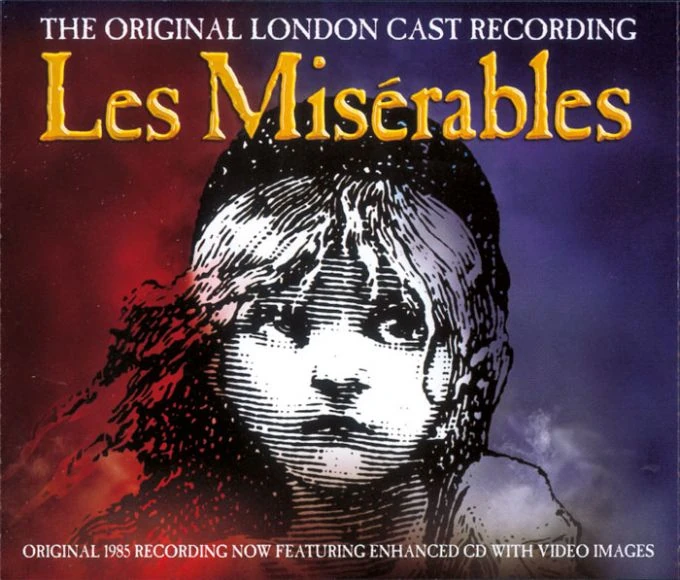
My first true obsession
My family had just moved back stateside after a few additional years in Europe. My adjustment to US culture was less than graceful, shall I say. On top of my classic awkwardness, I started to realize that I saw the world differently than many other kids. Things that I was obsessed with they had never heard of before, like stories about the Holocaust or the musical Les Misérables. My family celebrated different holidays extracted from varying cultures, such as Mardi Gras from our native Louisiana to the Feast of St. Nicholas from Germany. We were different; I was different.
This came as a shock to me. I had been a foreigner for most of my living memory. Now, in the one country where I felt I should fit in, I felt more foreign than ever.
My favourite book growing up.
It is part of a series by Carol Matas about the Holocaust
I thought about this a lot. I took an inventory of all of the things that made me feel different and I realized something—these were the things that I got most excited about in life. I LOVED all of this weird hodge-podge mix of European history and culture that I had absorbed from my time overseas. I wouldn’t trade it for the world.
My next realization was at how much more of this stuff there is to learn out there. There are so many countries! With so many cultures! And so much history! I would learn what I could about the US while I was here…but you just look out, world! Because one day…
  • Goal #2: Live abroad again

The Year(s): 2002/2004
I had hung out with band nerds in high school and college, loved the violin (became a goal in 2002), and grew to enjoy Cajun music (added the fiddle in 2004). Hence, Goal #3. But, this is unrelated to the story at hand. Moving on.

One Big “How”

So by age 19, I had my three life goals pretty set. Obviously I had other, practical goals like, finish university, get a job, be happy, etc. I just figured that those are the kinds of things that happen along the way in life. You can stumble into a job and wake up 20 years later having had a “career” there.  So I focused on the goals that would require more diligence to seek out. I would have to be intentional. I would have to examine how I wanted to live my life.
As these things go, this “How” question had to be supported by my values—things like: community, travel, appreciation of cultures, helping others, courage, and love.
It turns out my one big “How” that encompasses all of this also came from my childhood, specifically a mantra of my former Girl Scout leader (and mom):

  • The Big How of Living: Leave the world better than you found it.
It’s that simple. Make someone smile on a crummy day. Teach someone something they didn’t know. Connect more deeply with those around you. Contribute. Understand another person better than you did before. Live in a way that uplifts those around you, wherever you are.

Wisdom of Children

Grown-ups always ask children what they want to be when they grow up. By the time I was 10, I was already knew this much:
  • I wanted to live abroad
  • I wanted to learn another language (or two)
  • I wanted to live in a way that uplifts people
  • I wanted to do all of these things at once…so I wanted to be a teacher and join the Peace Corps.
The rest is history. I became a slightly different kind of educator after college, but still was teaching nonetheless. And I bided my time until the time was right to join the Peace Corps.

I guess the real question is… now that I’ve completed half of my life goals list, what do I do next?

________________________________________

Post Your Thoughts!

  • What is one life goal that I should add to my list?
________________________________________
Blogging Abroad's Boot Camp Blog Challenge: Starting January 2015

Wednesday, September 30, 2015

Born Free in South Africa: Spotlight from the NY Times

For the most part, we've used this blog to post our own experiences and insights into South African life, history, diversity, and culture. But, who says that you should only hear from us?

It only makes sense that we should include the perspectives of South African nationals in our efforts to share more of this great country with you.
Source: http://twentyjourney.com/wp-content/themes/twentyjourney/images/sipho.jpg
The New York Times recently ran an article titled, "Born Free in South Africa." The journalist interviewed Sipho Mpongo, a photographer and self-described “born free” South African, meaning that he was born close to or after 1994. The general marker of a born free is that the only South Africa they have ever known has been governed democratically and without apartheid-era policies. As a result, there is a fascinating variance in their perspective on the social/cultural dynamics of South Africa (racism, classism, gender equality), the role that history should play in the understanding of those dynamics, and the way forward. I say “varied” because it will range from, "Why are we dwelling in the past? That stuff ended before I was even born" to, "The same social issues are still happening in our lives. When are we going to put an end to all the underlying ideas that supported the apartheid polices?"

Sipho was born in a rural village in the Eastern Cape province, the same province in which Nelson Mandela was raised. To quote the article, "though he came of age in a nation claiming to be democratic, he knows better than anyone that moving past decades of state-sanctioned segregation takes time." He looked around his village and still saw racial segregation, an imbalance of wealth, and poverty.

“I never thought I was free growing up. I’m still struggling. My parents still struggle,” - Sipho Mpongo.

Sipho became fascinated with understanding the different perspectives of his fellow born frees, because he believes in the responsibility they will hold for shaping the future of South Africa. He started a journey to seek out and document their stories and experiences in the hopes that people—himself included—can witness and learn from the diversity within his own country. “It was a learning process for me, being in a new environment within your own country and feeling awkward,” he said. “I had to forget about me and my morals and just be with my subjects and understand what they were living.”

He calls his project “Twenty Journey” and has partnered with two other photojournalists to cross the country collecting stories and sharing them with the world.

“I’m only providing a small picture to show what things looks like. I hope people dig deeper, for themselves.” – Sipho Mpongo

I hope you do.
____________________________
DIG DEEPER:

Thursday, September 10, 2015

Boxed Lunches and Racism

There is a grade 7 learner at my school, let’s call him “M.N.”, who always comes to the library to eat lunch with me and a group of his friends. I first mentioned him in this post from March 2015. He watches a lot of US movies, particularly racing movies, and is known among my friends for his insightful and often strange questions that he poses to me while we eat. Some of my favourites have included:
  • How many times has someone tried to use reverse psychology on you? Does Joe use it?
  • If someone tried to steal your ride, what would you do for revenge?
  • What is one problem that you grew up with that you will die with?
  • How many times have you been doing a front-flip or a back-flip or a side-flip and fallen on your face?

As you can see, the topics can vary greatly and almost anything is fair game. So, I wasn’t surprised when M.N. started our lunchtime conversation with, “I want to ask you a question, but I don’t think you will like it…”

Me: Well, ask me and we will see.

M.N.: Why is it that white people do not like black people so much?

Me: That sounds like a very important question. Why do you think that white people don’t like black people?

M.N.: Well, it’s just that they kept passing these laws that say that black people must live in one place and white people must live in another. It’s like they don’t want to live near us. So I can only think that they must hate us.

Me: You are right. They passed many laws that said that white people must do these things and black people must do something different, like having different rules, different schools, different jobs, even different drinking fountains. Many white people, especially in historical times, believed many things that were not true about black people.

M.N.: Like what?

Me: Well, for example, they believed the lie that black people are not able to manage jobs that are in businesses or offices. They said that they are only able to do work with their hands. So, they prevented black people from being able to work certain jobs or become the boss in a company.

M.N.: [disbelief] My father worked at the hospital for many years. He also worked in an office at the bank for a long time. He was responsible for budgets with millions of dollars. How can they believe these things?

Me: I am not sure, but I think part of the problem is that they don’t hear these stories like the one of your father. They only hear the things that are not true and they don’t have someone to tell them the truth. We must tell them these stories like your father’s to show them what is true.

M.N.: But, why should I be the one who has to tell the story when you are the one who knows them and can tell it to them.

Me: [thinking both, “I’m totally getting schooled by a 7th grader” and “my kids are brilliant!”] You are right, M.N. I can do that.

… and so I kept my promise. 


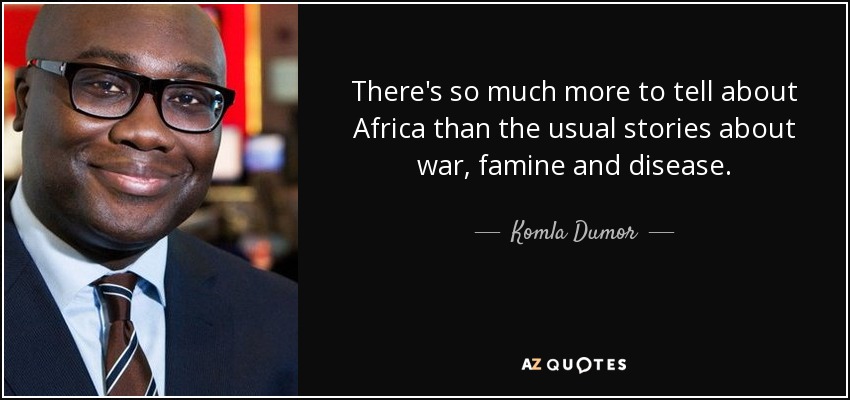
Source: http://www.azquotes.com/picture-quotes/quote-there-s-so-much-more-to-tell-about-africa-than-the-usual-stories-about-war-famine-and-komla-dumor-67-26-66.jpg

Sunday, August 30, 2015

Nicole & Eddie Visit the HK’s!

“Learn from yesterday, live for today, look for tomorrow, rest this afternoon.”
~ Charlie Brown (written on the menu board at Buccaneers Backpackers in Cintsa, Eastern Cape) 
Our rendition of an "awkward family photo." How did we do?!
Michelle and I were blessed to have Nicole and Eddie Minkoff visit us during the July break from school.  While we were together, we were able to go on a road trip along the Wild Coast.  What a beautiful place!  There was a lot to see and do; especially since we enjoy the outdoors.  And the best part – we got to enjoy it with two of our best friends from back home.

Learn from Yesterday: Addo Elephant Park
African elephants at Addo Elephant Park
We definitely found a strong connection to “yesterday” at Addo Elephant Park. Our guide taught us much about the history and significance of the many animals native to South Africa. We learned why humans are unable to domesticate zebras, the differences between African elephants and Asian elephants, and the complicated history between these beautiful creatures and humans. We learned that all of the reserves and parks refuse to release their population counts for black rhinos because they do not want to attract the attention of poachers. We learned that if you are worried about meeting a lion, hang out with a zebra—they can spot a lion at a great distance. We learned that anything, truly anything, could be disguised as a warthog (and vice versa).
“Look at that elephant… Never mind, it’s a warthog.” 
“Was that an eland or a hartebeest?” “Neither, just a warthog.” 
“Is that a lion?!” “Nope. Warthog.”
Warthog: The chameleon of mammals...
Most importantly, we learned about the interconnected history between South African tribes and the wildlife. You can imagine what this land would be like if the animals hadn’t been rounded up behind fences (or, in many cases, such as the lions in Cape Town, killed off by settlers). You gain a sense of reverence for who/what this territory truly belongs to.
Zebra at Addo Elephant Park

Live for Today: Cave Hunting & Cliff Diving
Our first full rest day was in Coffee Bay. We took advantage of this beautiful locale by taking a day hike to find some locally renowned coastal caves. The owner at the backpackers that gave us instructions said the hike should take about 45 minutes, will “follow the beach”, and would pass a deep lake/inlet along the way.  
Our trusty guide dog
The first 10 minutes of the hike followed the beachfront. This is where we met our trusty guide…dog.  At first, we thought the dog was just following us because it wanted food.  But the farther we walked, the more we realised the dog knew where he was going.  The dog stayed with us through the village, wading across the inlet, around the rocks, up a second hill, through some guy’s yard, down a sketchy goat path, through a coastal tunnel and to the hidden cave! At each turn, the dog was there waiting for us as if to say, “Come on guys – this way!”
Posing for a photo between the caves
 On the journey back, Michelle and I decided to linger a little longer at this deep inlet lake. We had been told that there were some awesome cliff diving spots along the edge. The diving spot was a bit like the three bears—there was a baby step (about 1 metres/3.3 feet), a medium step (about 3 metres/9.8 feet), and a giant step (about 6 metres/19.7 feet). Joe had bravely tested the depth from the baby and medium steps, when a group of small children happened upon the swimming spot. One fearless child, who looked to be about 8 years old, climbed straight up to the top and dove right off. We couldn’t believe his tenacity.  Seeing that he was unharmed, our confidence grew.  Michelle followed suit and went to the highest step.  With the help of a countdown from the kids, she leapt into the air holding her nose.  Using the kids and their countdown, I went next.  It felt like I was falling for an eternity, but just as quickly as I left the step I came splashing down into the water.  It was exhilarating!
Joe's leap
Michelle's leap

Rest this Afternoon: Change of Plans at Hole in the Wall
Sounds easy enough...
We planned a seemingly reasonable 13 km hike from Coffee Bay to Lubanzi Beach. We embarked on the journey bright-eyed and bushy-tailed and were not disappointed. The view was breathtaking! The rough fishing trails meandered up and down the green hills along the gorgeous coastline….and up…and down…and up…and through a village…and down. Perhaps we should have learned from our cave hunting experience that any guidebook that says “…and then just follow the coast” is lying to you.
Stunning view from the fisherman's trail
En route to Hole in the Wall
After about 5 hours on trail, we arrived at the famous Hole in the Wall; a natural phenomenon caused by water erosion over time. We started out on our final leg of the hike and realised that we may have bit off more than we could chew. Michelle’s new boots weren’t cooperating…and who could leave this gorgeous view…
Nature is cool!
After re-grouping, we decided to forgo the extension of our trek, rent a room at the local backpackers, and splurge for milkshakes and dinner. The rest was welcomed and we felt properly spoiled.

Note: In our decision to rest, we had to cancel our reservation at the Mbolompo Xhosa Homestay near Lubanzi Beach. This was a true disappointment and we are sorry that we did not get to meet the lovely host family. If you find yourself in the area, consider staying with a local family and breaking bread together.
The view looking over the town of Hole in the Wall
Look for Tomorrow: Thekwini (Durban) and Beyond…
Our last stop was Thekwini (the isiZulu name for Durban). It was our first chance to show old friends around some of the places we have come to love in South Africa. We took Nicole and Eddie to our favourite restaurants, felt like old pros navigating the complicated city taxi system, and enjoyed a lovely walk along the oceanfront. We reflected on the many highlights of our journey together. We have travelled with Nicole many times before, but this was our first time to embark with Eddie as a part of the crew. We are so very glad that he did.  It was such a joy to get to know him better and an honour to witness their joy and love for each other.
Awwwww! Aren't they so adorable?!
There’s nothing like being able to pick up again with old friends and, moreso, being able to create new memories. We are so grateful that Nicole and Eddie ventured all the way to South Africa to share this with us!


Nicole, Eddie, and Joe in Durban

Wednesday, May 6, 2015

Cape Town Series: Untold Stories

By far, my favorite Cape Town attractions were the varied and rich museums. Unfortunately, Joe and I were only able to visit three museums: the Iziko Slave Lodge Museum, the District Six Museum, and the Bo-Kaap Museum. I say only because I am discovering that I have an abnormal love for social and cultural exhibits. In preparing this post I finally realized what draws me in to this particular breed of nerd-dom—I seek stories. I am passionate about witnessing the stories of real people behind social movements and historical cliff notes, the ordinary lives that weave together to form extraordinary societies and bring about the very best—or sometimes worst—of our humanity.

These are precisely the kinds of stories we found in the museums of Cape Town.

The Iziko Slave Lodge Museum: Stories of injustice, resistance, and female activists
The Iziko Slave Lodge Museum building once housed 9,000 slaves during the early life in the colony of Cape Town. The slaves were stolen from their homes in East Africa, Mozambique, Madagascar, India, and several countries all throughout Asia—even as far away as Japan. The living conditions were atrocious: there were almost no exterior windows for ventilation or light, the basement would often flood, the rooms were overcrowded, and the central feature was a courtyard where the public floggings would take place. Despite massive renovations and the passage of time, I could still feel the somber weight of death and sorrow held within its walls.

The first floor of the museum is very well curated and includes videos, art displays, a reading of primary texts, photos, diagrams, and stories of life within the slave lodge. There were many displays that I found moving. One that was particularly striking was a backlit column that was etched from floor to ceiling with some of the known names of those who were enslaved. Knowing that each name represented a person with a life, family, talents… and that this column was just a sample of those whose stories have been tragically lost and remain untold.

Human trafficking and slavery still exist in our world. The Slave Lodge is not a relic. It is a reminder that there are untold numbers of "slave lodges" in our world today. Our work is not finished.
On the second floor, they switch gears and the displays have less…focus, shall we say? It included: collections of silver and trinkets from wealthy white cape families, weaponry from tribes and colonists, history of women’s textiles, mail service in port, a display devoted to the music of the struggle for freedom, and three rooms devoted to female freedom fighters. I would like to spend some time with these last two.

In the exhibit titled "Singing Freedom: Music and the struggle against apartheid," it was powerful to see how protesters rose against each blow from the apartheid government with new songs and new resolve. I loved to hear the many different South African languages expressing these words of resistance and power. The display showed how the music evolved over time and ended with a case study, if you will, to ask the reader to reflect on the place of these songs in our current social context and history. This rose many questions within me that I enjoyed tumbling through.
Nobel Square, Cape Town.
Statues honouring Chief Albert Lithuli, Archbishop Desmond Tutu, FW de Klerk, and Nelson Mandela.
The final display was titled “There’s something I must tellyou” and shared, through three different art forms, the stories, lives, and sacrifices of women in the anti-apartheid movement. Often the stories of the freedom fighters are male-centric; we hear about Nelson Mandela, Steve Biko, Oliver Thambo, Chief Lithuli… never Lillian Ngoyi, Helen Johnson, Ellen Khuzwayo (Exhibit A: the statues pictured above!). My eyes diligently read every word and tried to etch every face into my memory. The most powerful element for me was a documentary in which a few of these women shared their stories, lessons, and passions in interviews with their daughters. The passing of this wisdom from one generation of women to the next moved me beyond words. I've embedded just one of the videos for your viewing pleasure. Others are included at the webpage linked to the title of the display (above).


The Bo-Kaap Museum: Stories of community, contribution, and belonging
The Bo-Kaap museum highlights the social, political, and cultural significance of the “Cape Malay” community within Cape Town's history, present, and future. (NOTE: “Cape Malay is the commonly used collective term for Cape citizens who trace their ancestry to Southeast Asia or East Africa. The term does not acknowledge the sheer diversity of the community it represents. The term is also often interchanged with “Cape Muslim” as Islam is a very popular religion within the community.)

Visiting this museum was an intentional choice for us. As I stated in the previous paragraph, much of the social and political history of Cape Town that is told today focuses on the exploits and interaction between white men and black men. There are a few footnotes of other cultures and racial groups, but the story is largely neglected and untold. I wanted to gain even a sliver of knowledge of the gaps in this narrative.

The museum is small, but welcoming. The furniture is warm and the stories are rich. My favorite display was a display of interviews with residents and former residents of the Bo-Kaap, titled “Bo-Kaap in Conversation." Two of the residents were brothers who both went on to become educators and principals. They shared how their upbringing inspired their path and work towards justice within the school system. I loved hearing their stories and seeing their home through their eyes.

My second favourite display was on the wall of an open community space. The wall showed highlights from community mapping activities with the resident. They highlighted the significant meeting spots and cultural centers. It also showed the sheer number and diversity of mosques within the small sector of the city.

We are still largely ignorant (because an exhibit can barely scratch the surface and are no replacement for deep, consistent interaction), but I appreciate the museum for bringing forth voices I had never heard and stories I had never known.

The District Six Museum: The stories of home, expulsion, and renewal
Source: http://farm2.static.flickr.com/1097/5143441094_138aea8302.jpg
In the late decades of the 19th century, District Six was one of the most racially diverse communities in Cape Town. In 1966, under the Group Areas Act of 1950, the district was deemed a white residential area. The government began the forced removal of 60,000 established residents, which continued for nearly two decades. Families were expected to move to crowded townships on the other side of town or other racially segregated sectors of the city. In a neighbourhood where car ownership was a rarity, this meant that many never saw their old friends again, could no longer get to their jobs, and had to close their businesses. Many of the city blocks that were razed by the government are still vacant lots, shadows of the lives that used to thrive in the area.

The museum is largely owned, developed, and curated by former District Six residents. They have contributed their photos, letters, and day-to-day anecdotes of their lives before the forced removal. You can read about the social clubs, the shops and factories, the old hang-outs, even the former street gangs of the neighbourhood. They have captured the lives as they were—and the grief and pain when that life was lost.

The most powerful aspect of the museum is the space it has provided for former residents to mourn, advocate, engage together, and heal. It has started to host varying programs to reconnect residents and capture their stories in powerful ways. Some examples include:
  • Embroidery: During a community meeting, the former residents were asked to share their former address and a few thoughts. These were recorded and embroidered into long sheets that line the side of the lobby.
  • Cooking: Former residents are invited to share their favourite family recipes (and their accompanying stories) as a group cooking class. Each participant’s recipe and story was subsequently stitched into fabric and displayed. You can walk the hallway and witness the diversity of meals and cultures from the community.
  • Poetry Mosaic: Former residents wrote poetry about their journey of displacement and finding home onto ceramic tiles. These tiles were then cemented into the concrete of the new addition of the museum.
  • Youth Programs: The museum hosts programs for youth, particularly exploring the themes of cultural identity, peace and activism through art, and recording oral history.
The museum has also been active in the efforts to provide financial restitution for the families.

Final Reflection
For a few years now I have been toying with the idea of doing an art series combining some form of portraiture with an artistic expression/story-telling of our intersectional identities (examples: a self-portrait collage which highlights my connections to white privilege, gender oppression, and queer identity through pictures and textures; or a similar series where each piece is devoted to one identity; or a written reflection overlaid over a portrait… but I’d need more photoshop skills to pull that off). These exhibits really renewed that passion for a long-term project that would combine art, capturing stories, and social justice. I’ve been googling graduate programs in art therapy, peacebuilding, sociology, and social justice. I would need to be so much more qualified and enhance my technical skills, but… the idea of working in a community art space with structured artistic-reflective-justice-themed activities in an urban (or semi-urban) environment makes my heart and mind race with ideas and hope.

So, just to crowd-source a bit: Leave a comment if you know of a community center or graduate program doing this awesome work! I’d love to check it out!


Thursday, April 9, 2015

Cape Town Series: Introduction

The frame says it all...
Michelle and I recently vacationed in Cape Town during the April break from school. We did a lot and had a wonderful time while we were there, so there’s much to tell. In an attempt to keep from writing a blog post that’s 15 pages long, we’re going to try writing a series of posts about our time there. Topics we’re thinking about writing, in no particular order, include: 
  • Time spent with friends
  • Robben Island and museums
  • Animals and nature
  • Shark diving
  • Paragliding
  • Driving on the left-hand side of the road
  • Ice cream and other delicious food
  • Male privilege
We hope this helps make the posts easier to digest since they’ll come out in bite-size pieces.


A Quick History about Cape Town…

Archaeologists have discovered tools from the Stone Age suggesting that the area known as Cape Town was inhabited thousands of years ago. Fast forward to a few hundreds ago, Cape Town was inhabited by Khoikhoi and San peoples. Portuguese explorers took refuge in the natural harbor of Cape Town in the 1500’s, and later the Dutch set up a resupply port while they were establishing the Dutch East India Trading Company. The English eventually came to assert their authority and control over Cape Town in the 1830’s. All the while, indigenous peoples still inhabited the land. However, with the arrival of Europeans, indigenous peoples relocated to other areas.

While the Dutch were in control of the area, they tried utilizing the Khoikhoi and San peoples to complete manual labor but were unsuccessful. Alternatively, peoples from other African and Asian nations were forced into slavery. When the English took over, slavery was abolished; however, former slaves were still kept in a quasi-bondage because they had to complete apprenticeships with their former masters before they could strike out on their own. With slavery no longer in affect, the English looked for other ways to complete manual labor. Indentured servants from India, Malaysia, and other parts of Southeastern Asia were brought in.

Fast forward to today, Cape Town is a mix of cultures and skin tones. Many languages can be heard on the streets. And a variety of foods can satisfy just about any palette. Cape Town has a sorted history because of the practices put into place during the Apartheid era. And because Cape Town is arguably the most Westernized city in South Africa, practically any Western amenity one could imagine is available. Because of all of what I described above, Cape Town makes for a great place to visit, but I would argue that it’s important for visitors to take in its history and mix of cultures to get a true flavor of what it’s like.

Monday, March 23, 2015

Whiteness in Rural South Africa (a poem)

She was just a child.
She didn’t know.
She didn’t know that, although my skin is lighter than hers,
our bodies are no different.
That the oppressive midsummer South African heat,
would affect me just the same. No more worthy of note. Not significant.
She didn’t know.
She reached over and grabbed a pamphlet from the usher.
and fanned…
I felt my body stiffen in the cool breeze of her creation.
The child ignored the suffering of a hundred Black South Africans to provide some form of
oasis,
reprieve,
for the one. pale. face in the crowd.
My mind drifted from the woman that we came to put to rest and began to a new mourning.
To mourn a death, less corporeal,
yet no less fatal.
The death that happens when one’s soul willfully suffocates
because it believes someone with a different face, with different skin, with a different gender
is somehow more valuable…
More deserving of protection, comfort,
of
AIR.

She is just a child.
She doesn’t know.
She doesn’t know that her teacher is telling her lies.
The lie that a history filled with the exploits of Europeans is somehow more important
than the lives and triumphs of her tribe.
The lie that the West is the best: music, movies, clothes, culture, religion…
She doesn’t know.
She listens patiently to reminders of how “lucky” and “blessed” she is for the arrival of this
new, American teacher.
Not because of this teacher’s degrees or credentials.
Not because of her passion or love.
…Because she is White and from the West.
“And you must learn to talk with the White people in their own accent
otherwise they will not hear what you say nor want to talk to you.”
Because it is so important to appease the White man by stuffing your culture down inside of you and hiding it away.
I think I might throw up. I close my eyes…

My mind throbs with echoing screams of,
“Don’t believe their lies!”
But I know she can’t hear me.
I want someone to add the vibrant colours of African sunsets to her White-washed walls.
I want the words of Lillian Ngoyi, Madiba, and Biko to
            bounce
                                    endlessly
                        down
        the hallways
                                    of her soul.
She doesn’t know. She doesn’t see. She must learn. We must teach.
If not for our sake, then for hers.

As my mind spirals, a curious touch brings me back to the present.
“I like your hair,” she says, as she gently pets the ends of my strands.
“YOUR hair is also beautiful – omuhle! So beautiful!” I reply.
She smiles—so proudly—and skips away before I can speak again.

I sigh.
Did I say the right thing?
Has she enough pride to arm her against the next barrage of lies that try to make her feel small?
Will it ever be enough?


_____________________________________________________________

Reflection:

Whiteness. I am a white person. Wherever I go, I bring my whiteness. And that means different things in different places… Ever since we learned that we would be serving in rural South Africa, I have been thinking, “What will/does my whiteness mean in THIS place, in this context?”

I was struggling with putting my experiences into words until, inspired by the awesome blogging styles of Kyle and Aeriel Ashlee, I listed my feelings in a free verse poem. The poem highlights two actual events that have occurred in my village. I started a poem about a month ago and am nervous to share it with the world. In fact, I wasn’t sure that I was going to share it until today.

Today, I had a conversation with two incredibly brilliant learners in grades 5 and 7. The topic was the impact of having a white teacher in their school. I said that white people are no more special than black people. They said that I was lying. They rattled off a list of disparaging comments about their own race in comparison to whites. We went back and forth trying to disprove each other’s comments. Finally I said, “I have taught learners in America and South Africa of many different races. You two are some of the most clever learners I have ever taught. Your race does not matter.” The younger learner replied, “No, it can’t be. White people are more clever than black people. It is true.”

…My heart broke. My emotions flooded and rolled over each other in waves. Despair. Anger. A desire to throw away every English/Euro/US-centric book in the school and fill it to the brim with isiZulu literature and tribal heritage. A sense of helplessness. A sense of direction—to craft my curriculum to highlight black Africans and cultural pride. A sense of overwhelm. Guilt. Sadness. Anger.

I am still figuring out what my role will be in debunking these BS lies. I am not sure what it will look like, but I know that I cannot sit by and do nothing.
 

Monday, March 2, 2015

Ancestors: A Reflection

South Africa…

The connection between the living Zulus and their passed ancestors is evident in many ways: from naming traditions, to tribal allegiance, to overt ancestral consultations. There is a certain belief that the skills and wisdom of your fore-parents is passed on to you, without apprenticeship or guidance. Part of the journey of our lives is to unearth the wisdom that they have planted within us and use it as a guide.

For example, a colleague of mine has several ancestors who were sangomas, traditional healers who are able to use divination practices in their treatment. My colleague sometimes feels haunted by spirits in his life because he has inherited the wisdom of his sangoma ancestors, but has chosen to teach instead of using those skills. 

Another example is the ancestral consultation in daily events. Ancestors are consulted before weddings, celebrations, and divorce. Our PST host-father convened with the ancestors before embarking on a 2-day journey from home to his work.

To make my own meaning of these stories, I have tried on this new “way of knowing” as one would try on a new pair of high heels. I have attempted, clumsily, to take it through different scenarios and byways to see whether I can gain a greater perspective from a new vantage point.

I offer some of the resonant ideas for my readers here.

Ghana…

I just finished All God’s Children Need Traveling Shoes by the late Maya Angelou. The book describes her time living in Ghana, a country in West Africa. Towards the conclusion of her time in Africa, she describes her visit to Keta. Keta was a Ghanian village that was leveled by the slave-stealers who swept an entire generation away from their homes, leaving rubble in their wake. Although she had never set foot in this village before, her likeness was so similar to their stolen ancestors that some villagers wept at the sight of her.  Her body reacted viscerally, intuitively to predict the terrain of the landscape and its potential dangers lying around the next curve (ex: an untrustworthy bridge). It was as though she held the wisdom of the place within her very soul, untapped until her feet crossed its threshold.

Can it be possible to spread memory and wisdom from grandparent to child, even without meeting?

Louisiana…

Prior to joining the Peace Corps, I was exploring an interest in transgenerational/intergenerational trauma. Transgenerational trauma is the transmission of trauma (especially extreme, cumulative trauma) from one generation to the next. Meaning that you can experience something so horrific that your children’s children can be affected. There is some debate about how it is transmitted (initially, psychologists attributed it to parenting or external factors, new studies show the transmission at a cellular level, others connect it to something more metaphysical). It sounds like a depressing fascination—and it can be—but, sometimes the most important truths are neither cheerful nor comfortable. They wouldn’t be so important if they were easy.

My interest in researching generational trauma was framed and fed by Joy Dugruy’s speech on Post-Traumatic Slave Syndrome, sparked by my experience watching 12 Years a Slave and caught full flame by reading Gather at the Table, by Thomas DeWolf and Sharon Morgan. My family has centuries of history in southern Louisiana and, although they were not the wealthiest of southerners and may or may not have owned slaves (I don’t yet trust the validity of my researching skills to say with any certainty), they were witness to the dissolution of African lives into mere flesh, bones, teeth, and meat to be bought, sold, abused, and discarded. The ripples from the pain and inhumanity of slavery still tremble in the US, 150 years after the end of the Civil War.

The history of American slavery does not feel like textbook knowledge; something stirs within me as though I had been present during its prime. The sensation is beyond words or understanding. I knew I wanted to dig deeper, but I was unsure where to begin. Do other people ever feel this way? Just a few months before we left the US, I found Coming to the Table, a group consisting of the descendants of slaves with those of slave owners seeking to uncover the truth of slavery and healing, and I was finally convinced that I wasn’t completely alone. Unfortunately, I have not explored all of these feelings as much as I want.

Is it possible for the trauma of human degradation, the loss of one's humanity, the memory of those crimes—whether as perpetrator, victim, or witness—to live in our bodies and those of our descendants? If so, what lessons can these teach us about how we live our present lives? Is the connection with ancestral knowledge a constant status (either the result of cellular modifications or the existence of spiritual connection) or more intermittent (connected to a finite place or a specific ritual)? Is there any connection at all?

I’m not sure. But it gives me hope to feel that there may be a wellspring of talents and wisdom, much more expansive than our (meager) lives, which we can tap in our most dire moments. We can use all the help we can get.


________________
NERD ADDITIONS:
The Ancestors and Zulu Family Tradition - Doctor of Theology dissertation by Michael John Nel
Introduction to Transgenerational Trauma  - As originally studied in the descendants of Holocaust survivors
Research that Trauma is Passed "Epigentically" in Mice - Very interesting (and yes, depressing) research about the cellular responses to trauma.

Monday, August 18, 2014

Patriarchy and Gender Equality

Every country, including both the US and South Africa,grapples consistently with the big societal questions: Who are we? What do we believe? How do we believe society (read: social hierarchy) should be organized?

The US is experiencing these questions within issues such as: equal pay for woman, paternity benefits for men, marriage equality, social stigmas for stay-at-home and for working parents, changing (or clinging to) gender norms, the list goes on…
Although the specifics may be a bit different (for example, same-sex marriages have been recognized in SA for 8 years), South Africa is experiencing a similar push-and-pull between traditional and changing cultural values and gender norms. 

Traditional Roles:
This week, several Zulu men and women have been teaching us about their cultural expectations regarding dating, marriage, and gender roles. For example, traditionally,…
  •  A man would pay “lobola” (similar to a dowry) to the wife’s family. This signifies his commitment to her and her family and thanks them for raising such a marry-able woman. Our host mom was surprised that Joe got to marry me “for free!” Further, when the woman goes to live with the man, the woman’s parents lose a laborer.  The lobola signifies a compensation for the loss of her services.
  • A woman must listen to the wishes of the husband, including whether she is allowed to work outside of the home.
  • A man is expected to persistently pursue a woman. If she pursues him at all, she is too forward. In fact, she is expected to “play hard to get” even if she is interested.
  • The woman is expected to do all of the indoor chores (cooking, cleaning, child-rearing) around the house (sometimes, even if the husband has no outside job). This is especially drastic, since most homes are swept and mopped at least every day.
  • A man might be encouraged to take multiple wives in order to grow the family name, though this practice is dwindling.
  • Gender nonconformity and homosexuality are not socially accepted. To be “out” as trans* or queer may be a risk to your relationships or even your safety.
  • Particularly in rural areas, these roles are generally embraced by both men and women. The most common remark I have heard has been, “Why fix it if it isn’t broken?”
I highlight this last sentiment as a gut-check for those of us (myself included) who experience a knee-jerk reaction to this description. This rural community, in general, is not seeking to revolutionize their gender expectations.

It is notable that the only desire for change that I have heard is from men/women wishing to have more involved in the other’s chores (ex: my host brother loves taking care of the baby in the house, a woman disliking to clean, a young boy wanting to learn to cook). To this end, Joe’s desire to cook and hand wash his own clothes garners much interest from the community. :)

Changing Social Norms:
It has been interesting to juxtapose our traditional experiences with popular culture (TV, music, etc) and the social movements I see on the South African news channels. We witnessed the following elements in one night ALONE:
  • A protest seeking to provide resources to survivors of rape and sexual assault. Importantly, interviewees were connecting the prevalence of rape to patriarchal values.
  • A video clip of a gay pride event.
  • A protest seeking to de-stigmatize public breast-feeding. (it was sort of like a breast-feeding flash mob/sit in from what I could gather)
  • Non-hetero and trans* characters on a handful of the most popular TV shows (though, admittedly, still portrayed in negative, comical, or stigmatized roles).
As I mentioned, South Africa does have more legal protections and rights for people who are gay or queer.  My host family is shocked to learn that there are places in the US where someone who is gay could lose their job or be denied services because of their sexual identity.

The social tension between traditional and progressive values is very real in both of our countries. It seems, to me, that it will remain in tension for the entirety of each nation’s future.


Quote from Apartheid Museum

...In the meantime, Joe and I will strive to live as authentically and respectfully as we are able to in this country. Although we will likely feel a bit raw from bumping up against gender expectations on occasion, it is NOT our place to impose our ideals and values onto our SA friends and family. We are guests within this culture.
And in those raw moments, we will lean on our family and friends to help us heal and remind us that we can be as revolutionary as we would like to be—but only once we are back within our own culture. ;) :)

Sanibonani, abangani. (I see the humanity in you, friends, do you see it in me?)

Monday, August 11, 2014

Apartheid

“The only difference between the United States and South Africa is that South Africa is honest about what it is.” – Miriam Makeba

Today (written 7/10/14), we went to the Apartheid Museum in Johannesburg. At this point in our journey, our hosts and teachers have talked openly about the ugliness of apartheid. I have been humbled by how freely stories have been shared with us.

Visiting the museum was an incredibly moving experience, especially since there is an entire portion of the exhibit dedicated to the life and work of Nelson Mandela. The air was thick and heavy in the exhibit. There is so much life, and hate, and death, and pain, and shame, and violence… and hope, and power represented. 


Apartheid Museum Entrance

There were many experiences and quotations that gave me pause throughout the exhibit. There are three in particular that I would like to share as I reflect. 
  1. The wall of laws. There was an entire two-story wall COVERED with the laws that were passed to create and support apartheid. That means that lawmakers passed law, after law, after law, after law, to segregate, disenfranchise, rob, and oppress black Africans. Apartheid (slavery, Jim Crow, the Holocaust)… These don’t just “happen.” They are systematically built through deliberate actions, veiled as humanitarian or charitable in nature, allowed to persist into enforcement through prejudice, racism, and propaganda. 
  2. The presidential justification for these laws. There was a video of the then-prime minister justifying these laws as the means to create the best South Africa for white citizens and the best outcomes for “barbaric, semi-barbaric, semi-educated, and educated black South Africans.” He was using his sense of superiority as a white person to justify oppression as “being in the best interest” of the oppressed. Close your eyes, switch the continent…This is awfully familiar…
  3. The room filled with hanging nooses. I can’t type that and not get chills/shudder. Each noose represented a death sentence for opposing the apartheid regime. There are no words that would appropriately honor the sacrifice, pain, and loss… I could only sit in silence and be present.

I found myself thinking back to the Miriam Makeba quote about South Africa’s honesty about what it is. It made me reflect on the history of racism, slavery, Jim Crow, oppression within the US. Particularly, how they are (or are not) discussed, validated, and addressed. Mr. Baker has confirmed that the truth about apartheid is taught in SA schools, is told to children, and is on the forefront of the minds of their leadership. I doubt that the honesty, self-reflection, responsibility, and openness we have witnessed is universal with all South Africans (a world could never be so perfect). However, it did give me hope that one day all countries would face their ugliest of sins with as much openness and candor. The desire of a nation to talk about it, to heal, to change course, to find a new way is a difficult journey, but is something to be PROUD of!

"Our lives begin to end the day we become silent about things that matter." - Martin Luther King, Jr.